Building Greener: The Case for Hempcrete and Hemp Composites in America's Construction Industry
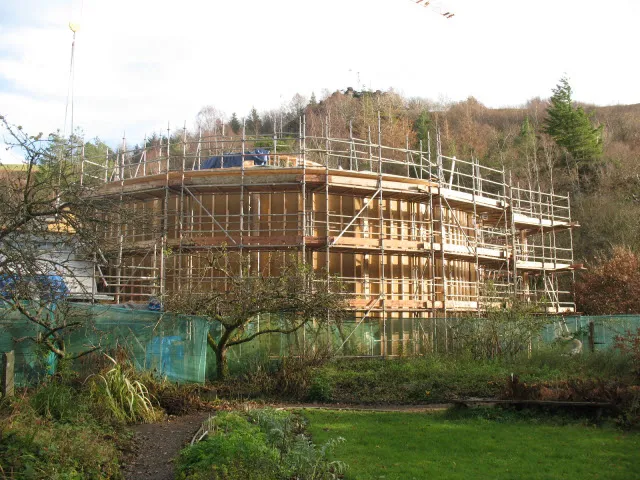
Photo: Stephen Craven, CC BY-SA 2.0, via Wikimedia Commons
The American construction industry is responsible for approximately 40 percent of total US energy consumption and a substantial share of national carbon emissions — a figure that encompasses everything from the energy-intensive manufacture of Portland cement to the operational energy demands of poorly insulated buildings over decades of use. Within that context, the emergence of hemp-based building materials is not a novelty. It is a structural response to a structural problem.
Hempcrete — a composite of hemp hurd (the woody inner core of the hemp stalk), lime binder, and water — has been used in European construction for more than three decades. In France alone, tens of thousands of structures incorporate hempcrete in some form. In the United States, the material remains at the margins of mainstream construction practice, constrained by regulatory ambiguity, limited domestic supply chains, and an industry culture that has historically been slow to adopt unfamiliar materials at scale. That is beginning to change.
What Hempcrete Actually Is — and What It Is Not
A persistent misconception about hempcrete is that it functions as a direct structural substitute for conventional concrete. It does not, and advocates who overstate this point do the material a disservice. Hempcrete is not a load-bearing material in the traditional sense; it requires a structural frame — typically timber — to carry vertical loads. What it provides, with considerable distinction, is a high-performance infill and insulating wall system that outperforms conventional alternatives in several critical dimensions.
The thermal performance of hempcrete is one of its most well-documented attributes. The material's cellular structure traps air in a way that produces a high thermal mass combined with meaningful insulation value — a combination that is difficult to achieve with standard insulation products. Buildings constructed with hempcrete walls tend to maintain more stable interior temperatures across seasonal extremes, reducing the mechanical heating and cooling loads that account for a large share of residential energy consumption in the US.
Dr. Marcus Webb, a building materials engineer who has consulted on hemp construction projects in Vermont and North Carolina, described the thermal dynamic in practical terms: "What you are getting with hempcrete is a wall that breathes — that absorbs and releases moisture in a way that regulates humidity naturally — while also providing a meaningful thermal buffer. Conventional construction rarely achieves both simultaneously without significant mechanical intervention."
Fire Resistance and Structural Resilience
Fire resistance is among the most counterintuitive of hempcrete's documented properties. Despite being composed of plant-derived organic material, hempcrete demonstrates a high degree of fire resistance due to the silica content present in hemp hurd and the mineralizing effect of the lime binder. Testing conducted by European standards bodies has shown that hempcrete walls can achieve fire resistance ratings comparable to those required for residential construction under US building codes — a finding that has begun attracting serious attention from American fire safety engineers.
Hemp-reinforced composites — materials in which hemp fiber is used to strengthen polymer or cement matrices, analogous to fiberglass reinforcement — extend the performance case further. Research published in peer-reviewed construction engineering journals has documented hemp fiber composites achieving tensile strength and impact resistance profiles that rival or exceed those of fiberglass in specific applications, with the significant advantage of being bio-based and, under the right conditions, biodegradable at end of life.
For the construction industry, where fiberglass is ubiquitous in insulation, panel systems, and reinforced plastics, this represents a potentially significant substitution opportunity — one with measurable implications for both embodied carbon and end-of-life waste streams.
Pioneering Builders and Early Case Studies
A small but growing cohort of American builders has moved beyond the theoretical and begun delivering completed hempcrete structures. In Asheville, North Carolina — a region that has become something of an epicenter for alternative building experimentation — several residential projects completed in the past five years have used hempcrete infill walls in timber-frame construction. Owners of these properties report substantially lower heating and cooling costs compared to neighbors in conventionally built homes of similar size, consistent with the material's documented thermal performance.
In Colorado, a commercial retrofit project incorporated hemp-lime plaster and hempcrete block systems into an older building's envelope as part of a deep energy renovation. The project's lead architect, speaking at a regional sustainable building conference, described the outcome as "among the most cost-effective insulation upgrades we have achieved on a per-unit-of-energy-saved basis" — a metric that tends to get the attention of developers whose enthusiasm for sustainability is contingent on financial viability.
These examples remain isolated. But they are accumulating.
The Regulatory Bottleneck
The most significant impediment to hempcrete's broader adoption in the United States is not technical. It is administrative. The International Residential Code (IRC) and International Building Code (IBC), which form the basis for building regulations across most American jurisdictions, do not currently include standardized provisions for hempcrete construction. This absence does not make hempcrete illegal — builders can and do obtain approvals through variance processes — but it does make each project significantly more expensive and time-consuming than it would be if the material were formally codified.
Advocates have been working with the ICC (International Code Council) to advance hempcrete toward formal inclusion in the model codes, a process that requires rigorous documentation of material properties, performance testing, and installation standards. Progress has been made: the 2021 IRC included, for the first time, an appendix specifically addressing hemp-lime construction — a meaningful symbolic and procedural milestone, though one that still leaves substantial work ahead before hempcrete becomes a routine specification option for American contractors.
State-level action has the potential to accelerate this timeline. Several states with active hemp agricultural programs — including Kentucky, Colorado, and Oregon — have shown preliminary legislative interest in creating state-specific building code pathways for hemp materials, a development that could generate the real-world data needed to support broader federal code adoption.
The Environmental Stakes of Scale
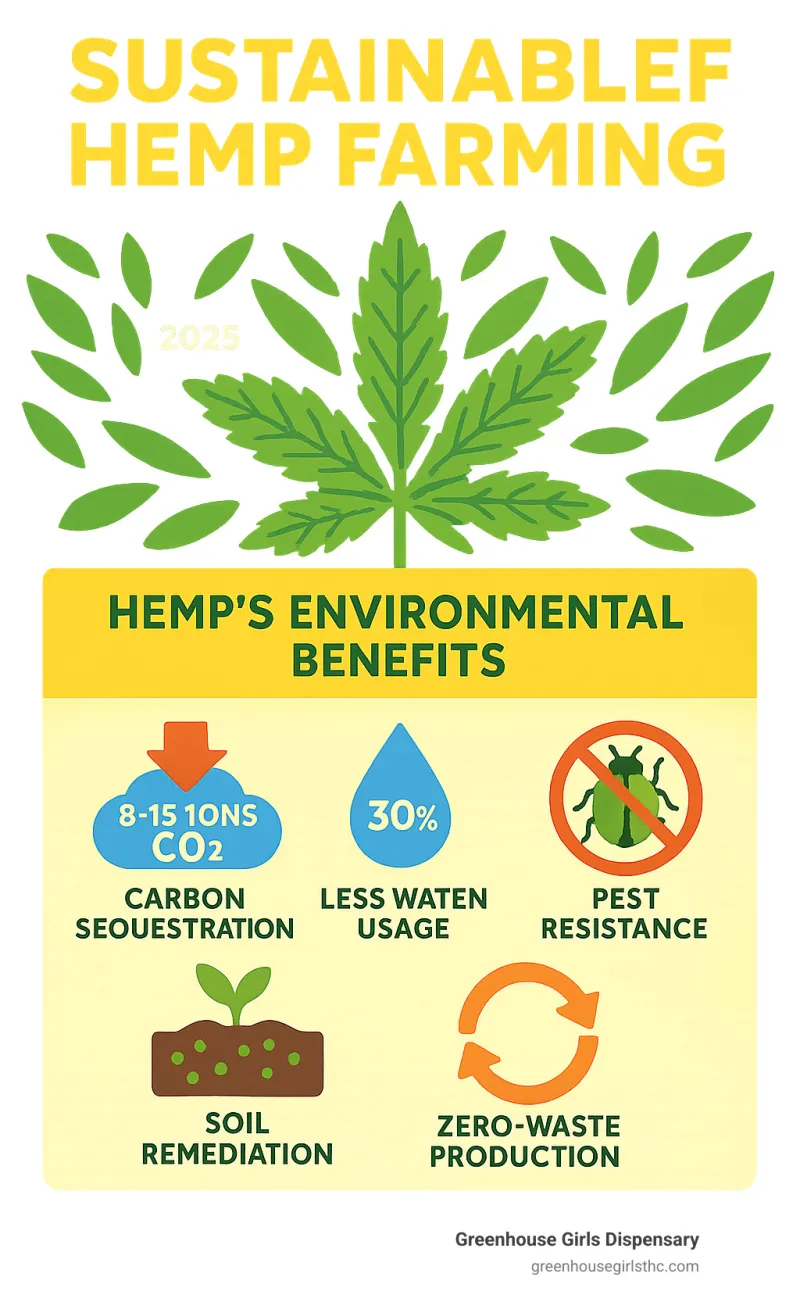
The environmental arithmetic of scaling hempcrete nationally is compelling. Conventional concrete production is responsible for approximately eight percent of global CO₂ emissions. Hemp hurd, by contrast, is a carbon-sequestering byproduct of a crop that itself captures atmospheric carbon during its rapid growth cycle. When that carbon is locked into the lime matrix of a hempcrete wall, it remains sequestered for the functional life of the building — potentially a century or more.
A modeling analysis conducted by a university research team in 2022 estimated that if hempcrete were adopted in just ten percent of new US residential construction over the following decade, the cumulative carbon benefit — combining avoided emissions from displaced conventional materials with the sequestration value of the hemp component — would be measured in the tens of millions of metric tons of CO₂ equivalent.
That is not a marginal improvement. It is a material contribution to national climate commitments.
The American construction industry has rebuilt itself before — after the introduction of engineered lumber, spray foam insulation, and structural insulated panels, each of which faced its own period of regulatory skepticism and market resistance before becoming standard practice. Hempcrete and hemp composites are following a similar arc. The science is sound. The early evidence from the field is encouraging. What remains is the institutional will to move.