Dead Ground Rising: How Hemp Is Breathing Life Back Into America's Exhausted Farmland
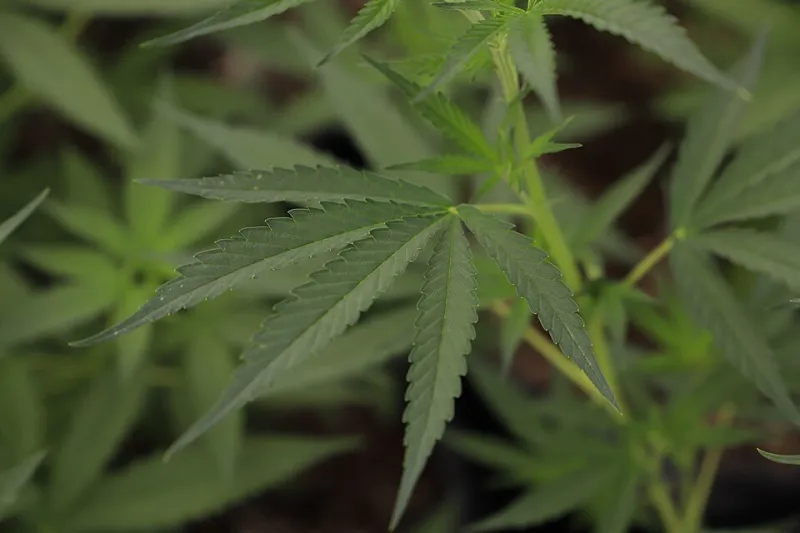
Photo: USDAgov, Public domain, via Wikimedia Commons
Drive through the agricultural corridors of Illinois, Missouri, or the Carolina Piedmont, and the landscape tells a story that USDA crop reports rarely capture. Fields that once produced abundant yields now require ever-increasing inputs — synthetic fertilizers, herbicides, fungicides — just to maintain mediocre productivity. The soil beneath those fields, after generations of compaction, chemical saturation, and biological depletion, has in many cases become little more than an inert growing medium. It holds seeds. It no longer truly nurtures them.
This is the inheritance of industrial monoculture. And it is precisely the problem that a growing number of American farmers are turning to hemp to solve.
The Science of Soil Destruction — and What Reverses It
Healthy agricultural soil is an ecosystem. It teems with bacteria, fungi, nematodes, earthworms, and countless other organisms that break down organic matter, fix nitrogen, suppress pathogens, and create the porous structure that allows roots to breathe and water to move. Conventional tillage, combined with synthetic nitrogen applications, systematically dismantles this ecosystem over time. Research published in the journal Applied Soil Ecology has consistently demonstrated that continuous corn or soybean monocultures reduce microbial biomass and fungal diversity significantly compared to diversified rotations — a finding that translates directly into diminished long-term yield potential and increased input dependency.
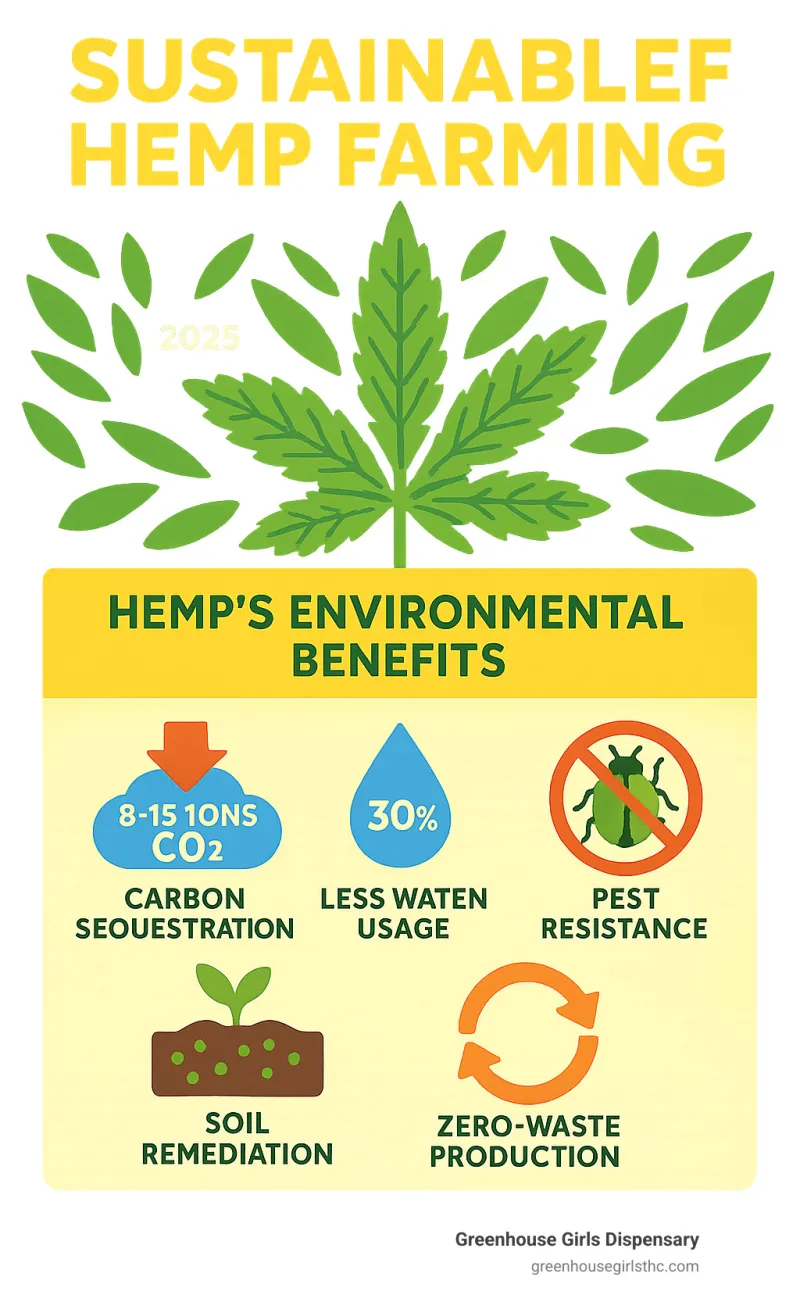
Hemp (Cannabis sativa L.) disrupts this cycle in several important ways. Its root architecture is notably aggressive. The taproot can penetrate 6 to 9 inches into compacted subsoil layers, physically breaking apart hardpan — the dense, impermeable layer that forms beneath years of tillage at a consistent depth. As these roots decompose after harvest, they leave behind channels that improve aeration and water infiltration, benefits that persist for subsequent crops in the rotation.
Beyond mechanical remediation, hemp's dense canopy — which closes within weeks of emergence — suppresses weed pressure without herbicide intervention, reducing chemical load on the soil. The crop also produces substantial biomass that, when incorporated or left as surface mulch, feeds microbial communities and contributes meaningful organic matter. According to research supported by the National Institute of Food and Agriculture, incorporating hemp residue can increase soil organic carbon by measurable margins within a single growing season, a finding with significant implications for long-term fertility management.
Phytoremediation: Hemp as Environmental Cleanup Crew
Perhaps the most compelling — and scientifically documented — dimension of hemp's soil-restoration capacity is its ability to absorb and accumulate heavy metals and other contaminants through a process known as phytoremediation. The plant's hyperaccumulating tendencies have been studied since the 1990s, most famously in the aftermath of the Chernobyl nuclear disaster, where industrial hemp was planted around the contaminated site to draw radioactive cesium and strontium from the soil.
In the American agricultural context, the relevant contaminants are different but equally serious. Decades of phosphorus overapplication have created toxic accumulation zones in farm soils across the Midwest and the Mid-Atlantic. Cadmium, lead, and arsenic — introduced through certain fertilizer formulations and atmospheric deposition — persist in agricultural soils at levels that compromise both crop safety and ecosystem health. Hemp, particularly varieties bred for high biomass production, has demonstrated a consistent capacity to draw these elements into plant tissue, where they can be removed from the field at harvest rather than continuing to cycle through the soil.
Importantly, this characteristic requires careful management. Biomass harvested from phytoremediation applications should not enter the food or fiber supply chain without rigorous testing. Responsible hemp farmers working contaminated acreage typically partner with industrial processors who can handle high-contamination plant material or use it for energy generation. The soil, however, is measurably cleaner for the effort — a benefit that compounds over successive seasons.
Midwest Case Studies: Farmers Who Made the Transition
In southern Indiana, a family operation that had farmed continuous corn for three generations made the decision to introduce hemp into a four-year rotation following a soil test that revealed severely depressed organic matter levels and a pH imbalance that was costing them bushels annually. After two hemp cycles interspersed with cover cropping, follow-up testing showed a 0.4 percentage point increase in organic matter — modest in absolute terms, but significant given how slowly that metric typically moves. Their input costs for the corn years that followed dropped noticeably, primarily through reduced fertilizer requirements.
In the Mississippi Delta region, a cooperative of small-scale landowners began cultivating hemp on acreage that had previously been in continuous cotton production for decades. Cotton is among the most soil-depleting crops in the American agricultural portfolio, and the land showed it — compacted, low in biological activity, and heavily reliant on synthetic fertility programs. The cooperative's hemp rotation, supported by extension guidance from a regional land-grant university, produced marketable fiber in its first year while simultaneously beginning the process of biological restoration. Soil respiration measurements — a proxy for microbial activity — improved by more than 30 percent over the first two growing seasons.
These are not isolated anecdotes. They reflect a pattern that agronomists and soil scientists are documenting with increasing rigor as the hemp industry matures and more farmers gain multi-year experience with the crop.
The Economics of Restoration: Why Long-Term Profitability Favors Regenerative Hemp Rotation
Skeptics of regenerative agriculture practices often frame soil health investments as a luxury that only well-capitalized operations can afford. The data from hemp rotations challenges this framing directly. Because hemp commands a meaningful price premium over commodity crops — particularly in the fiber, grain, and CBD markets — it can generate revenue during the restoration process itself, rather than requiring farmers to absorb the cost of a fallow period or low-value cover crop season.
Furthermore, the downstream savings are real and compounding. Reduced herbicide expenditure, lower fertilizer requirements in subsequent crop years, and improved yield consistency on healthier soil all contribute to a financial profile that strengthens over time. A 2022 analysis from a Midwestern agricultural extension program estimated that farms incorporating hemp into a diversified rotation could reduce total input costs by 12 to 18 percent over a five-year period compared to continuous monoculture, even accounting for the learning curve and compliance costs associated with hemp licensure.
For landowners who have been watching their soil's productive capacity erode for decades, this represents something genuinely valuable: a way to invest in the land's future without sacrificing the present.
Rethinking What Farmland Is For
The conventional agricultural model has long treated soil as a substrate — something to be managed, corrected, and pushed to produce. Regenerative hemp cultivation proposes a different relationship, one in which the farmer's role includes stewardship of a living system rather than management of an industrial input.
This is not merely philosophical. As climate volatility increases, the resilience advantages of biologically active, organically rich soil — better water retention during drought, improved drainage during flooding events, greater buffering capacity against temperature extremes — will become economically decisive. Farmers who have invested in soil health through hemp rotation will be better positioned to weather the agricultural disruptions that climate science projects for the coming decades.
America has roughly 900 million acres of farmland. Much of it is in some stage of degradation. Hemp will not restore all of it, and no single crop should be expected to carry that weight alone. But as part of a broader commitment to regenerative practice, hemp cultivation offers something rare in agriculture: a tool that improves the resource base while generating income from it. That combination — productivity and restoration, simultaneously — is precisely what depleted American farmland needs.