The Overlooked Byproduct Feeding America's Livestock — and Challenging the Soy Monoculture
Soybean meal has dominated American livestock nutrition for the better part of a century. It is abundant, standardized, and deeply embedded in the supply chains of poultry, swine, cattle, and aquaculture operations from coast to coast. It is also, by nearly every environmental measure, a product of extraordinary ecological cost — one whose true price is rarely reflected in the commodity price farmers pay at the feed store.
Into this landscape enters an unlikely competitor: hemp seed cake, the fibrous, protein-rich residue left behind after industrial hemp seeds are cold-pressed for their oil. For decades, this material was a marginal curiosity in countries where hemp cultivation was legal. Today, with American hemp acreage expanding steadily since the passage of the 2018 Farm Bill, hemp seed cake is positioning itself as a genuine contender in the sustainable livestock feed market — and a growing number of American farmers and veterinary nutritionists are paying close attention.
A Nutritional Profile Worth Examining
Hemp seed cake — sometimes referred to as hemp seed meal — is not a novelty supplement. It is a substantive protein source with a nutritional composition that compares favorably to soy in several meaningful respects.
On a dry matter basis, hemp seed cake typically contains between 30 and 35 percent crude protein, depending on processing method and seed variety. That figure places it in the same general range as conventional soybean meal, which averages approximately 44 to 48 percent crude protein in its solvent-extracted form. The gap narrows considerably, however, when quality rather than quantity is the measure. Hemp seed protein contains all nine essential amino acids, with particularly strong concentrations of arginine, glutamic acid, and the branched-chain amino acids critical to muscle development and immune function in livestock.
Perhaps more significant from a practical feeding standpoint is hemp seed cake's fatty acid profile. The meal retains meaningful levels of omega-3 and omega-6 fatty acids — in a ratio approximating 3:1, which nutritionists consider close to ideal for inflammatory balance in animal physiology. Research published in the Journal of Animal Physiology and Animal Nutrition has documented improved coat condition, reduced inflammatory markers, and favorable growth metrics in swine and poultry fed hemp-supplemented diets, findings that have attracted attention from progressive livestock producers looking to reduce their reliance on pharmaceutical interventions.
The fiber content of hemp seed cake — typically 25 to 35 percent — limits its inclusion rate in monogastric species like poultry and swine, but makes it particularly well-suited to ruminant nutrition. For cattle, sheep, and goats, the digestible fiber fraction provides slow-release energy while supporting rumen microbial health. Several American cattle producers operating under regenerative management frameworks have begun incorporating hemp seed meal into their winter supplementation programs, citing both the nutritional benefits and the alignment with their broader ecological commitments.
Voices from the Field
Among the early adopters is a sheep and cattle operation in the Bluegrass region of Kentucky — a state with deep historical ties to hemp cultivation and one of the most active domestic hemp industries in the country. The farm's operator, who began incorporating hemp seed meal into winter hay supplementation two seasons ago, describes the transition as driven as much by philosophy as by nutrition.
"We were already questioning the logic of shipping soy from the Midwest when we had hemp processors twenty miles away producing meal they couldn't fully sell," he explains. "The nutritional numbers were good enough to try it, and the animals responded well. We've reduced our soy inclusion by about forty percent in the winter ration."
In Oregon's Willamette Valley, a poultry producer working within a certified organic framework has been collaborating with a veterinary nutritionist at Oregon State University to develop inclusion protocols for laying hens. Early results suggest that flocks receiving hemp seed meal supplementation at 10 to 15 percent of total diet show comparable egg production rates to soy-fed controls, with preliminary data indicating elevated omega-3 levels in egg yolk — a quality attribute that commands premium pricing in direct-market and specialty retail channels.
"The challenge right now is consistency," notes the veterinary nutritionist involved in the trial. "Hemp meal quality varies considerably between processors, and we don't yet have the standardized feed-grade specifications that the industry has developed for soy over decades. That's coming, but it's one of the gaps that needs to be closed before hemp feed scales meaningfully."
Navigating the Regulatory Terrain
The regulatory environment surrounding hemp-derived animal feed in the United States remains one of the primary obstacles to broader adoption, and understanding its contours is essential for any farmer considering this transition.
At the federal level, the Food and Drug Administration has not yet issued a formal approval for hemp seed cake or hemp seed meal as a livestock feed ingredient under the Federal Food, Drug, and Cosmetic Act. The FDA's Center for Veterinary Medicine has acknowledged the growing interest in hemp-derived feed ingredients and has indicated that regulatory pathways are under review, but formal guidance remains pending as of 2024.
In the interim, several states have moved independently. Kentucky, Colorado, and New Mexico are among the states that have adopted state-level regulations permitting hemp seed meal in livestock rations, creating a patchwork framework that allows some producers to move forward while others remain in a holding pattern. The Association of American Feed Control Officials (AAFCO) — the body that sets model feed regulations adopted by most states — has hemp feed ingredients on its active agenda, and industry observers expect incremental federal clarity within the next two to three years.
For farmers operating in states with permissive frameworks, the practical path forward involves sourcing meal from processors who can provide certificates of analysis confirming THC levels in the finished product remain below detectable thresholds — a straightforward requirement given that industrial hemp seed oil pressing does not concentrate cannabinoids in the resulting cake.
Closing the Loop: Hemp Feed and the Circular Economy
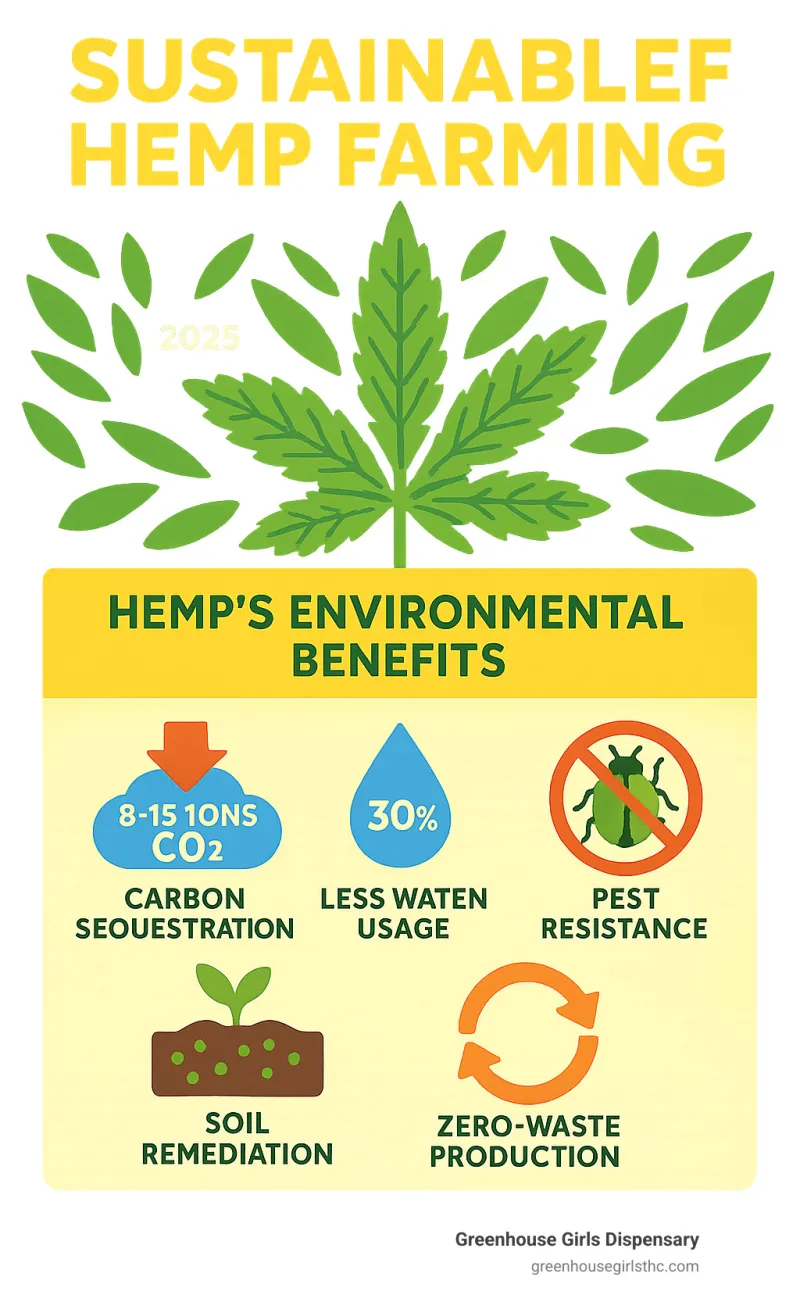
Beyond its nutritional merits, hemp seed cake represents something that industrial soy fundamentally cannot: a circular economy byproduct. Every ton of hemp seed cake that enters a livestock ration is a ton of value extracted from a crop whose primary products — fiber, oil, grain — are already serving other markets. This circularity is not incidental to hemp's sustainability case. It is central to it.
Soy cultivation, by contrast, operates within one of the most ecologically disruptive monoculture systems on the planet. American soybean acreage exceeds 87 million acres annually, a footprint that carries significant implications for biodiversity, synthetic fertilizer runoff, and carbon emissions from soil disturbance. The feed industry's dependence on this system is not inevitable — it is a choice, one that can be incrementally revised as alternatives demonstrate viability.
Hemp seed cake is not positioned to replace soy overnight, nor should it be. But as a complementary protein source that generates revenue for domestic hemp processors, reduces feed miles for farmers near hemp-growing regions, and delivers genuine nutritional value to livestock, it represents exactly the kind of practical, science-grounded transition that sustainable agriculture requires.
The barn door, as it were, is opening. The question is how quickly American agriculture is willing to walk through it.