Beyond the Opioid Default: How Hemp-Derived Cannabinoids Are Reshaping the Science of Pain

Photo: Elsa Olofsson, CC BY 2.0, via Wikimedia Commons
For decades, the American medical establishment has leaned heavily on opioid pharmaceuticals to manage chronic pain — a strategy that has delivered relief to many patients while simultaneously fueling one of the most devastating public health crises in the nation's history. Over 80,000 Americans died from opioid-related overdoses in 2023 alone, according to the Centers for Disease Control and Prevention. Against that backdrop, a quieter revolution is unfolding in research laboratories, clinical trials, and agricultural fields across the country: scientists and farmers are increasingly looking to hemp as a legitimate, scalable source of non-addictive pain management compounds.
At the center of this conversation are two hemp-derived cannabinoids — cannabidiol (CBD) and cannabinol (CBN) — both of which interact with the human endocannabinoid system in ways that researchers believe hold genuine therapeutic promise for chronic pain, arthritis, and systemic inflammation.
What the Endocannabinoid System Has to Do With It
The human endocannabinoid system (ECS) is a complex cell-signaling network that regulates a range of physiological processes, including pain perception, immune response, and inflammation. Unlike THC — the psychoactive compound found in marijuana — CBD and CBN do not produce intoxicating effects. Instead, they appear to modulate the ECS through indirect pathways, influencing receptors associated with pain signaling and inflammatory cascades without triggering the psychoactive response that has historically complicated cannabis-based medicine.
CBD, the more extensively studied of the two, has demonstrated anti-inflammatory properties in preclinical studies by inhibiting the production of pro-inflammatory cytokines — proteins that play a central role in conditions like rheumatoid arthritis and neuropathic pain. A 2020 study published in the Journal of Clinical Medicine found that CBD application reduced joint inflammation and pain behavior in animal models of arthritis, results that have since spurred several human clinical trials now underway at institutions including the University of Michigan and Vanderbilt University Medical Center.
CBN, though less prominently studied, is attracting growing interest for its sedative and analgesic properties. Early-stage research suggests it may be particularly effective for localized pain relief and could work synergistically with CBD — a phenomenon researchers call the "entourage effect" — amplifying the therapeutic impact of both compounds when used together.
The Clinical Evidence: Promising, Not Yet Definitive
It is important to be precise about where the science currently stands. The evidence base for hemp-derived cannabinoids in pain management is genuinely promising, but it remains in a relatively early phase. Most rigorous human trials have been small in scale or of short duration, and the FDA has approved only one CBD-based pharmaceutical — Epidiolex, prescribed for rare forms of epilepsy — for a non-pain-related indication.
Nevertheless, the trajectory of research is meaningful. A 2022 systematic review published in JAMA Network Open analyzed data from over 2,000 patients across multiple randomized controlled trials and found that cannabinoids demonstrated statistically significant improvements in chronic pain outcomes compared to placebo, with a favorable safety profile relative to opioids. Crucially, no studies identified dependence or fatal overdose potential — two defining liabilities of conventional opioid therapy.
For patients managing osteoarthritis, fibromyalgia, and multiple sclerosis-related pain — conditions notoriously resistant to standard pharmaceutical interventions — these findings carry particular weight. The Arthritis Foundation has publicly acknowledged patient-reported benefits from CBD use and called for accelerated clinical research, a notable shift in posture from a major medical organization.
Regulatory Terrain: A Patchwork With Momentum
The 2018 Farm Bill federally legalized hemp cultivation and removed hemp-derived CBD from the Controlled Substances Act — a watershed moment that opened the door to both agricultural expansion and pharmaceutical research. However, the regulatory framework governing hemp-derived therapeutics remains fragmented. The FDA has yet to establish a clear pathway for CBD as a dietary supplement or over-the-counter therapeutic, creating uncertainty for both manufacturers and consumers.
That regulatory ambiguity is beginning to shift. In 2023, the FDA issued a request for Congress to establish a new regulatory framework specifically for CBD products, signaling acknowledgment that the current system is insufficient. Several bipartisan bills have been introduced in the Senate to address this gap, with sponsors citing both public health imperatives and economic opportunity for American farmers.
State-level momentum has also accelerated. More than 40 states have enacted legislation permitting hemp cultivation and CBD product sales, and several state agricultural departments are actively partnering with universities to fund hemp-specific clinical and agronomic research programs.
Why Farmers and Pharmaceutical Companies Are Paying Attention
The convergence of medical interest and agricultural opportunity is not coincidental. Hemp is a remarkably efficient crop — it requires significantly less water than conventional pharmaceutical-grade botanical crops, grows in a wide range of American soil conditions, and can be harvested in approximately 90 to 120 days. For farmers in states like Kentucky, Colorado, and North Carolina — where hemp cultivation has already gained footholds — the prospect of supplying a pharmaceutical-grade cannabinoid supply chain represents a significant economic incentive.
Large pharmaceutical companies have taken notice. Several major players, including Jazz Pharmaceuticals and GW Pharmaceuticals (now part of Jazz), have invested in cannabinoid-based drug development pipelines. The global cannabinoid pharmaceutical market is projected to exceed $50 billion by 2030, according to market analysis from Grand View Research, with hemp-derived compounds representing a substantial and growing segment.
For US hemp farmers, integration into pharmaceutical supply chains would represent a stabilizing force in a market that has experienced considerable price volatility since the 2018 Farm Bill's passage. Pharmaceutical-grade cultivation demands precision — specific cannabinoid profiles, rigorous testing protocols, and certified growing practices — but it also commands premium pricing and long-term supply contracts unavailable in the commodities market.
The Broader Stakes
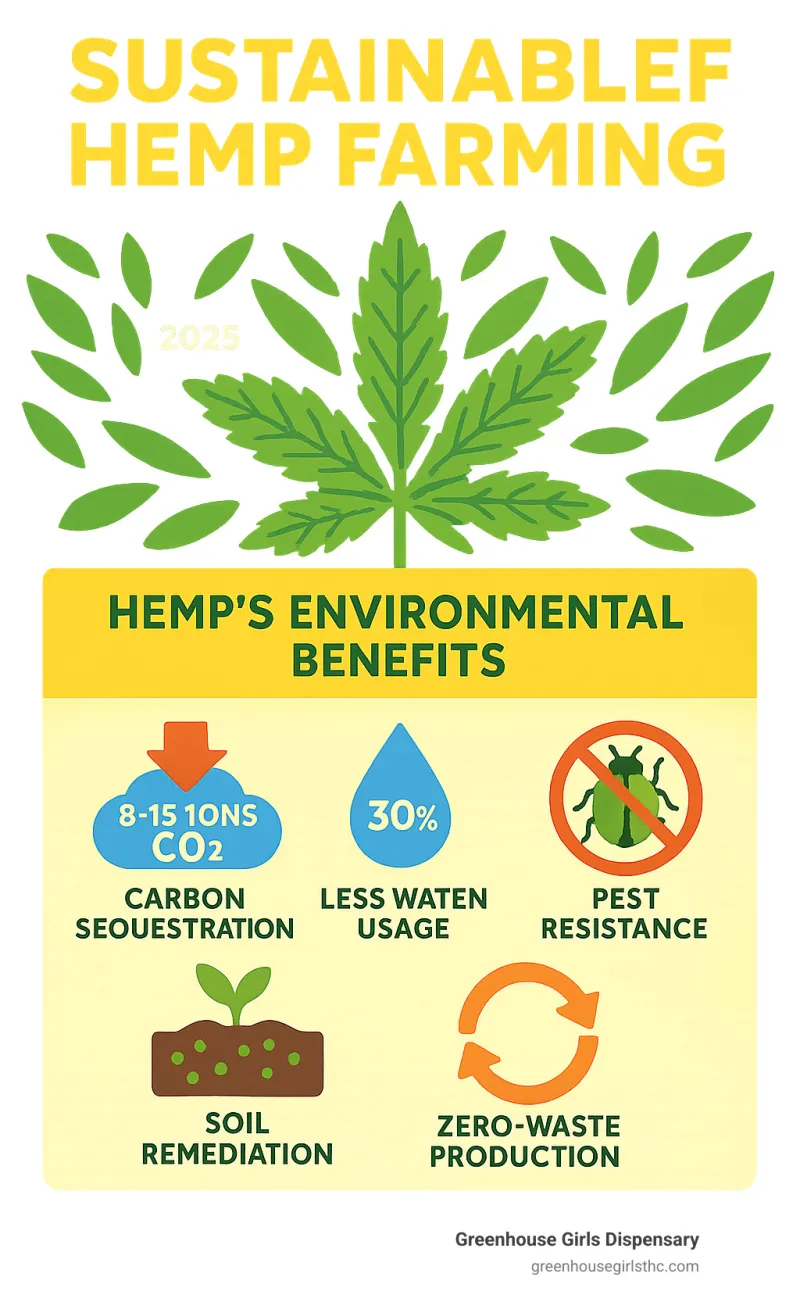
The case for hemp-derived pain management extends beyond individual patient outcomes. Every prescription opioid that is replaced by a non-addictive, plant-based alternative represents a reduction in systemic risk — fewer overdoses, less pharmaceutical waste entering water systems, and a diminished burden on emergency healthcare infrastructure. Hemp cultivation itself contributes positively to soil health, sequesters carbon, and requires minimal pesticide application, meaning that scaling a hemp-based pharmaceutical supply chain carries environmental co-benefits that synthetic drug manufacturing simply cannot match.
This is not an argument for abandoning rigorous scientific standards or overstating what the current evidence supports. It is, however, an argument for urgency — for funding the clinical trials, establishing the regulatory clarity, and investing in the agricultural infrastructure that would allow hemp's therapeutic potential to be fully and responsibly realized.
The opioid crisis did not emerge overnight, and it will not be resolved by a single intervention. But the science of hemp-derived cannabinoids is advancing with genuine momentum, and the cost of delaying its development is measured in human lives. American medicine has always been at its best when it follows evidence wherever it leads — and the evidence, increasingly, is pointing toward the hemp field.