No Hands on Deck: How the Hemp Industry's Labor Shortage Is Threatening America's Greenest Agricultural Frontier
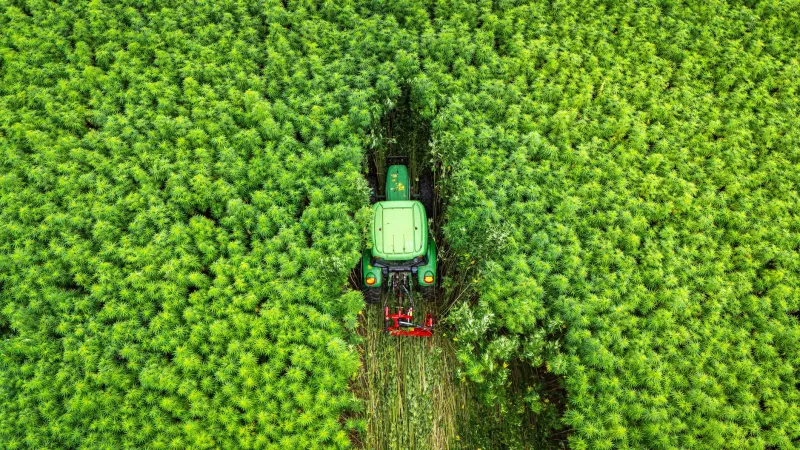
On a late September morning in central Kentucky, a hemp farmer stands at the edge of a field ready for harvest. The stalks are tall, the fiber dense, the cannabinoid content precisely where it needs to be. Everything is in order — except the crew. Two workers called out the night before. A third never showed up at all. The harvest window, already compressed by an approaching weather system, is narrowing by the hour.
This scene, or some version of it, has become routine across American hemp country. From the river valleys of Oregon to the piedmont of North Carolina, producers who have successfully navigated the industry's labyrinthine regulatory environment, secured financing, and coaxed viable crops from uncertain soil now face a problem that no federal farm bill can easily fix: they cannot find enough people to do the work.
A Workforce Gap With Deep Roots
The hemp industry's labor challenge is not simply a product of tight regional job markets, though that is certainly a contributing factor. It reflects something more structural — a decades-long erosion of agricultural workforce infrastructure in rural America, combined with the particular demands of a crop that has only recently re-entered the legal economy.
Hemp cultivation, especially at the artisanal or mid-scale level, is labor-intensive in ways that conventional commodity crops are not. Hand-harvesting flower for CBD and cannabinoid markets requires careful, repetitive work that demands both stamina and attention to detail. Processing fiber and hurd for industrial applications involves machinery that is neither widely understood nor widely taught in American vocational programs. And because hemp remained federally prohibited until the 2018 Farm Bill, there is no generational knowledge base to draw from — no community of retired hemp farmers passing skills to younger workers the way corn or soybean culture has been transmitted across Midwestern families for a century.
The result is a workforce that must be built largely from scratch, at precisely the moment when the industry is trying to scale.
The Wage Problem Nobody Wants to Discuss
For many hemp operations, the labor shortage is inseparable from a compensation problem. Hemp farming, particularly in the fiber and grain segments, operates on thin margins. Processors who purchase raw material from growers are themselves squeezed between input costs and the pricing pressure exerted by imported hemp products from Canada, China, and the European Union. The downstream economics make it genuinely difficult to offer wages competitive with those available in nearby warehousing, construction, or service sector jobs.
Seasonal agricultural work has never been well-compensated in the United States, and hemp is no exception. But unlike a row crop that requires intensive labor only during planting and harvest, hemp — particularly when grown for flower — demands consistent, skilled attention across a longer portion of the growing season. Producers who want reliable, knowledgeable workers often find themselves unable to offer the year-round employment that would justify a worker's investment in learning the crop.
The farms that are retaining workers tend to be those that have found ways to extend the employment relationship beyond the growing season: through on-farm processing, value-added product development, or diversified agricultural operations where hemp is one component among several. Vertical integration, in this context, is not merely a business strategy — it is a workforce strategy.
Automation's Double-Edged Promise
The machinery industry has taken notice of hemp's labor problem, and a growing number of equipment manufacturers are developing or adapting solutions for mechanized hemp harvesting, decorticating, and processing. For large-scale fiber operations, automation holds genuine promise. Industrial hemp grown for hurd and long fiber can, in principle, be harvested and processed with equipment not entirely unlike that used for flax or other bast fiber crops in Europe, where the industry has a longer modern history.
But automation's benefits are unevenly distributed. For small and mid-sized farms — which represent the majority of hemp operations currently licensed in the United States — the capital costs of sophisticated harvesting equipment are prohibitive. A mid-range hemp decorticator capable of processing fiber at commercial volumes can cost tens of thousands of dollars, a sum that many producers cannot access without favorable financing terms that the agricultural lending market has been slow to extend to hemp.
Further, mechanization addresses only certain categories of labor. The careful, judgment-intensive work of monitoring plant health, managing canopy, scouting for pests, and selectively harvesting flower for premium markets remains stubbornly resistant to full automation. The farms most dependent on skilled human labor are often those operating in the highest-value market segments — which creates a paradox wherein the most economically promising hemp businesses are also the most exposed to workforce instability.
What Successful Operations Are Doing Differently
Among hemp producers who have developed stable, reliable workforces, several common strategies emerge. First, many have invested in workforce development partnerships with regional community colleges and agricultural extension programs, creating pipelines for trained workers who arrive with at least foundational knowledge of the crop. States including Colorado, Vermont, and North Carolina have begun incorporating hemp into their agricultural education curricula, though coverage remains inconsistent and underfunded.
Second, operations that offer housing — particularly in rural areas where affordable worker accommodation is scarce — report significantly lower turnover. This is not a new phenomenon in American agriculture, but it is one that the hemp industry has been slow to embrace, in part because the capital investment required is substantial and the regulatory environment governing agricultural worker housing is complex.
Third, and perhaps most importantly, the farms reporting the strongest workforce outcomes are those that have invested in treating agricultural labor as skilled work deserving of skilled compensation. This means structured training programs, clear advancement pathways, and wages that reflect the genuine complexity of what hemp cultivation requires. These are not common features of American farm employment culture, and implementing them requires a deliberate departure from the extractive labor models that have historically characterized much of US agriculture.
Hemp's Rural Employment Potential — and the Policy Gap
If the labor challenges facing the hemp industry are significant, so too is the opportunity that lies on the other side of solving them. Hemp, as an input for fiber, construction materials, food products, and bioplastics, has the potential to anchor a diversified rural manufacturing sector in regions that have lost industrial employment over the past several decades. The Appalachian coalfields, the post-tobacco communities of the mid-South, the struggling dairy counties of the upper Midwest — all of these geographies have been repeatedly identified as natural candidates for hemp-based economic revitalization.
But that revitalization will not materialize through market forces alone. It requires coordinated investment in workforce training, processing infrastructure, and the kind of patient, long-term rural economic development policy that the United States has rarely managed to sustain. The USDA's existing rural development programs have begun to engage with hemp, but funding remains modest relative to the scale of the challenge.
The labor crisis facing hemp farms today is, in one sense, a problem of industry adolescence — the growing pains of a sector still building its institutional foundations. But it is also a mirror held up to broader failures in American agricultural labor policy, rural investment, and the long-deferred question of what kind of farm economy this country actually wants to build.
Hemp cannot answer that question alone. But it offers, perhaps more clearly than most crops, a vision of what agriculture could look like if the answer prioritized sustainability, rural vitality, and genuine human dignity alongside yield and efficiency. Whether that vision is realized depends, in no small part, on whether enough hands show up to bring in the harvest.