Sequenced Abroad, Ignored at Home: The Federal Neglect Costing America Its Hemp Science Future
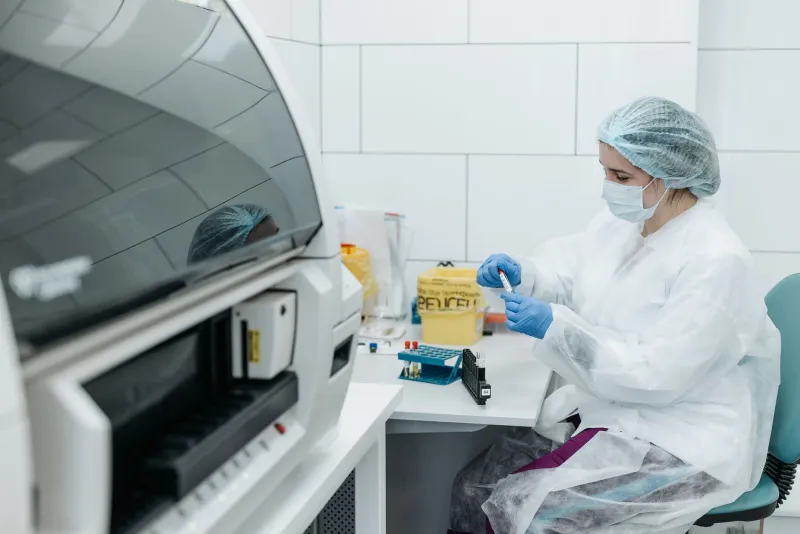
In genomics laboratories in Guelph, Ontario, and research stations scattered across the Netherlands and France, scientists have spent the better part of the last decade doing something the United States federal government has largely declined to fund: systematically decoding the genetic architecture of Cannabis sativa. The resulting knowledge — catalogued in publicly accessible international databases and proprietary breeding programs alike — now underpins a new generation of hemp cultivars engineered for drought tolerance, elevated fiber tensile strength, optimized cannabinoid profiles, and even enhanced phytoremediation capacity. American researchers, in many cases, are reading those findings secondhand.
This is not a story about a technology gap that emerged overnight. It is the predictable result of decades during which hemp's classification as a Schedule I controlled substance effectively froze federal agricultural science in place. The 2018 Farm Bill removed hemp from that classification, but it did not conjure the institutional infrastructure, the grant pipelines, or the trained plant geneticists that a serious national research program requires. Those things take years to build. Other countries did not wait.
What Genomic Science Actually Unlocks for Hemp Farming
To understand the stakes, it helps to understand what a well-funded genome sequencing initiative actually produces. Plant genomics is not merely an academic exercise in cataloguing base pairs. When researchers fully characterize a crop's genome, they gain the ability to identify which gene sequences govern specific traits — fiber length, seed oil composition, pest resistance, water use efficiency, flowering time — and to use that knowledge to accelerate selective breeding programs that would otherwise require generations of trial-and-error field work.
For hemp, this matters enormously. The plant's genetic diversity is extraordinary. Wild and landrace varieties adapted to high-altitude Central Asian climates carry different trait profiles than those developed for northern European fiber production or the warm, humid conditions of the American Southeast. A farmer in eastern Colorado trying to grow hemp for industrial fiber needs a fundamentally different cultivar than one in North Carolina growing for seed oil. Genomic science is what allows breeders to develop those cultivars with precision, rather than guesswork.
Canada's government-backed research network, anchored by institutions like Agriculture and Agri-Food Canada, has been mapping those distinctions for years. The result is a domestic seed industry that now exports certified hemp genetics to American farmers — who, in a striking irony, often have no domestically developed alternative.
The Funding Void Washington Created
The United States Department of Agriculture does fund some hemp research. Pilot programs authorized under the 2018 Farm Bill have allowed state agriculture departments and universities to pursue limited studies. The National Institute of Food and Agriculture has issued competitive grants touching on hemp agronomy. But the scale of this investment, when measured against the crop's commercial potential and the depth of the scientific deficit, is modest at best.
What has not materialized is anything resembling a coordinated national hemp genome initiative — the kind of sustained, multi-institution, multi-year effort that produced transformative advances in corn, soybean, and wheat genetics over the past several decades. The Human Genome Project demonstrated what deliberate federal investment in sequencing science can accomplish. No analogous ambition has been applied to hemp.
The consequences extend beyond seed catalogs. American pharmaceutical researchers exploring cannabinoid biosynthesis pathways are working from genomic reference data assembled largely by European and Canadian teams. Materials scientists investigating the genetic determinants of bast fiber quality are consulting databases their own government did not help build. This dependency is not merely inconvenient — it introduces structural disadvantages in patent filings, licensing negotiations, and the race to develop proprietary cultivars for emerging industrial markets.
Where the Breakthroughs Are Actually Happening
The scientific literature tells a clear story about where hemp genomics leadership currently resides. A landmark 2020 study published in Nature Plants, led by researchers at the University of British Columbia, produced one of the most complete chromosome-level assemblies of the hemp genome to date, identifying gene clusters responsible for cannabinoid production and providing a roadmap for precision breeding that researchers worldwide have since built upon. European consortia, particularly those operating under EU agricultural research frameworks, have advanced work on fiber-specific genetic markers with direct applications for sustainable textile manufacturing.
Meanwhile, Chinese research institutions — backed by substantial state investment — have been developing hemp cultivars optimized for industrial-scale bioplastic feedstock production, a market that analysts project will be worth billions of dollars annually within the next decade. China already dominates global hemp fiber processing. Genomic investment is how it intends to maintain and extend that dominance.
American scientists are not absent from this literature. University programs in Kentucky, Colorado, and Oregon have produced meaningful contributions. But they are operating with constrained resources, limited access to comprehensive genetic databases, and without the institutional continuity that sustained federal funding provides. Talented researchers cycle through short-term grants. Breeding programs that require a decade to validate results struggle to secure the multi-year commitments they need.
What a Domestic Initiative Could Still Accomplish
The argument for a federally funded American hemp genome program is not sentimental. It is economic and strategic. Hemp's potential applications span food systems, construction materials, carbon sequestration, pharmaceutical development, and advanced manufacturing. Each of those markets will increasingly be shaped by the quality and adaptability of available genetics. Nations that control superior germplasm and the intellectual property built around it will extract disproportionate value from the global hemp economy.
A serious domestic initiative would pursue several interconnected goals. First, a comprehensive sequencing and characterization of the genetic diversity held in existing American hemp germplasm collections — some of which dates back to pre-prohibition industrial cultivation and represents irreplaceable adaptive traits. Second, the development of publicly accessible genomic reference databases that allow American breeders, including small and mid-scale family farmers, to participate in cultivar development rather than simply purchasing seeds developed elsewhere. Third, targeted breeding programs aimed at cultivars optimized for specific American growing regions and end-use applications, from the arid Southwest to the humid Gulf Coast.
The investment required is not trivial, but it is modest relative to the subsidies routinely directed at commodity crops whose environmental costs dwarf anything hemp cultivation would generate. A hemp genome initiative funded at the level of, say, a mid-tier USDA competitive research program would still represent a fraction of what federal policy has historically directed toward crops that deplete soil, demand heavy chemical inputs, and contribute to the carbon loading of the atmosphere.
The Cost of Continued Inaction
Every year that passes without a coordinated federal commitment to hemp genomics is a year in which the scientific and commercial gap between the United States and its competitors widens. American farmers deserve access to genetics developed with American growing conditions in mind. American manufacturers deserve a domestic supply chain built on cultivars optimized for the specific fiber, oil, and bioactive compound profiles their industries require. American researchers deserve the institutional support to lead, rather than follow, the science that will define this crop's industrial future.
The hemp genome is not going to sequence itself. And the nations currently doing the sequencing are not doing it out of generosity toward American agriculture. They are doing it because they understand that the crop's future belongs to whoever understands it most deeply. Washington has so far declined to compete on those terms. The question is whether it will recognize the cost of that choice before the window to catch up closes entirely.