From Coal Dust to Cover Crops: Hemp's Emerging Role in Appalachia's Long Road Back
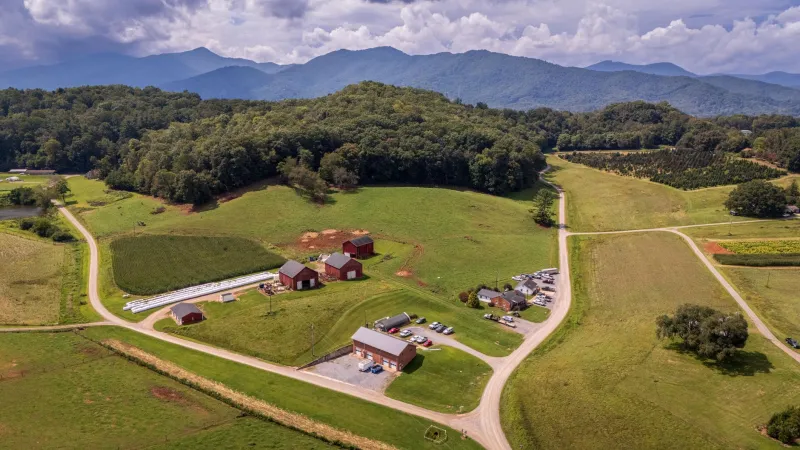
The mountains of eastern Kentucky, southern West Virginia, and southwestern Virginia have always been rich in something. For more than a century, that something was coal — a resource that built railroads, lit cities, and sustained entire communities, while simultaneously leaving behind a landscape of compacted soil, abandoned mine shafts, and waterways so acidic they run orange in the rain. Today, as the coal economy contracts with no realistic prospect of recovery, a growing number of farmers, scientists, and regional planners are asking whether hemp — a plant with deep American roots — might serve as both a livelihood and a land-healing instrument in one of the country's most economically distressed regions.
The answer, emerging slowly from field trials and community pilot programs, is cautiously affirmative. But it is not simple.
The Land That Coal Left Behind
To understand why hemp is attracting serious attention in Appalachia, one must first reckon honestly with what surface mining and underground extraction have done to the region's soil and hydrology. Acid mine drainage — the chemical runoff produced when sulfur-bearing rock is exposed to air and water — has contaminated hundreds of miles of streams across the coalfields. Heavy metals including arsenic, lead, cadmium, and selenium leach into groundwater and accumulate in sediment. Reclaimed mine land, required by federal law to be revegetated after extraction, is frequently covered in compacted fill material that bears little resemblance to functional agricultural soil.
For most conventional crops, these conditions are prohibitive. Corn and soybeans require soil pH levels and nutrient profiles that degraded mine land cannot provide without substantial — and expensive — amendment. Hemp, by contrast, has demonstrated a remarkable tolerance for stressed soil conditions, and in certain configurations, an active capacity to remediate them.
"Hemp is what we call a hyperaccumulator in some contexts," explains Dr. Marianne Collier, a soil scientist at Appalachian State University who has spent the past four years studying phytoremediation potential in post-mining landscapes. "It takes up heavy metals through its root system, concentrating them in the plant tissue. That doesn't mean you can eat the biomass from contaminated ground — you can't — but it does mean the crop is doing active cleanup work while it grows. Over successive seasons, you can measurably reduce soil metal concentrations."
The process is not instantaneous. Meaningful remediation typically requires multiple growing cycles, careful monitoring of plant tissue, and responsible disposal of contaminated biomass — which cannot enter the food or fiber supply chain. But for land that would otherwise sit idle for decades, even a slow trajectory of improvement represents progress.
Farmers Making the Pivot
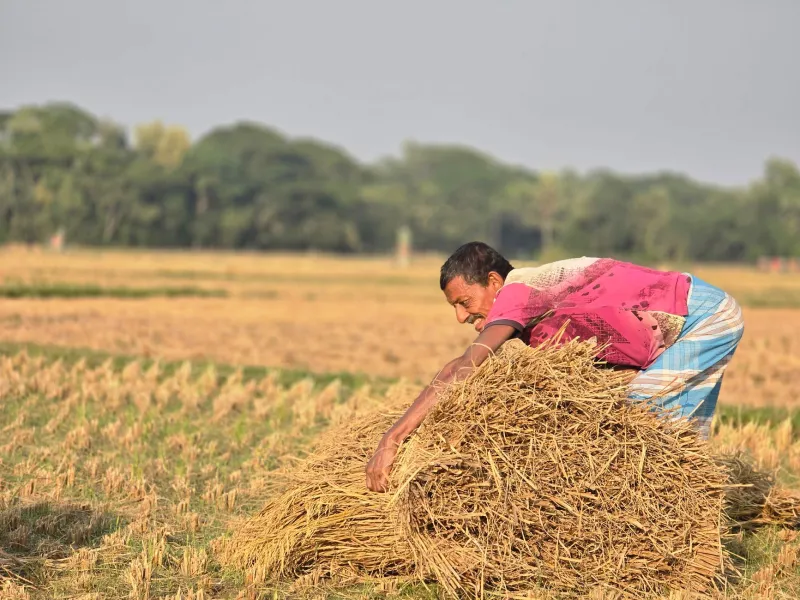
In Letcher County, Kentucky, third-generation farmer Dale Combs spent twenty-two years working underground before a roof collapse ended his mining career. He began growing hemp on twelve acres of former surface-mined ground in 2021, initially for fiber destined for an industrial processor in Tennessee.
"The first year was humbling," Combs says. "The soil didn't want to cooperate. The pH was all wrong, the drainage was poor, and we lost about a third of the stand. But we amended, we adjusted, and by year two we had a crop worth talking about."
Combs now cultivates twenty-eight acres and has diversified into hempseed production alongside fiber, working with a regional cooperative that aggregates harvests from eleven small farms across three counties. His gross revenue from hemp in 2023 exceeded what he earned in his final three years of mining combined — though he is careful to note that input costs remain high and the market is still finding its footing.
His experience is representative of a broader pattern emerging across the region. Hemp is not a guaranteed windfall. It demands infrastructure — processing equipment, certified seed sources, reliable buyers — that Appalachia's agricultural sector is only beginning to assemble. But for farmers willing to absorb the learning curve, it is producing returns that no other crop currently available to them can match on marginal ground.
The Economic Calculus
Regional economists have begun to quantify what a mature hemp industry could mean for Appalachian communities. A 2023 analysis by the Mountain Association, a Kentucky-based community development organization, estimated that a fully developed hemp supply chain — encompassing cultivation, processing, and value-added manufacturing — could generate between 4,200 and 7,800 jobs across the eastern Kentucky coalfields alone, depending on the scale of investment and the degree of vertical integration achieved.
Those numbers assume infrastructure that does not yet fully exist. Processing capacity is the critical bottleneck. Without local decorticators to separate hemp fiber from its woody core, and without seed processing facilities to handle harvest at scale, farmers are forced to ship raw material long distances at significant cost — eroding the margins that make the crop viable. Several community development finance institutions are currently evaluating loan packages for cooperative processing facilities, and at least two county governments have begun rezoning former industrial sites to accommodate hemp manufacturing.
"The model that works is not the individual farmer selling into a distant market," says Rhonda Tackett, executive director of a rural development nonprofit in Pike County, Virginia. "The model that works is a regional cluster — growers, processors, and manufacturers operating in proximity, sharing infrastructure costs, and capturing more of the value chain locally. That's how you build an economy, not just a crop."
Regulatory and Environmental Complexity
The path forward is not without its complications. Hemp cultivation on land contaminated by mining activity raises legitimate regulatory questions. The USDA's hemp licensing framework does not currently include provisions specifically addressing phytoremediation applications, meaning that farmers growing hemp on contaminated ground for cleanup purposes — rather than commercial harvest — occupy an ambiguous legal space. Advocacy organizations including the Hemp Industries Association have urged the agency to develop a dedicated remediation license category that would clarify compliance obligations and provide appropriate oversight without penalizing farmers engaged in environmental restoration.
There is also the question of what happens to contaminated biomass. Current federal guidance on disposal of phytoremediation plant material is fragmented, leaving farmers to navigate state-level environmental regulations that vary considerably across Appalachian jurisdictions. Standardized protocols for tissue testing, safe transport, and approved disposal methods would significantly reduce the legal and practical burden on small producers.
Despite these hurdles, the momentum is real. West Virginia's Department of Agriculture has partnered with West Virginia University's Extension Service to launch a multi-year demonstration program on reclaimed mine land, with the explicit goal of generating peer-reviewed data on hemp's remediation efficacy under Appalachian conditions. Kentucky's agricultural department has funded farmer training programs specifically targeting coalfield counties. And federal economic development grants through the Appalachian Regional Commission have begun flowing toward hemp supply chain infrastructure for the first time.
A Region Betting on Roots
Appalachia has been promised industrial salvation before — and has, more than once, been left holding the consequences. The skepticism that greets any new economic narrative in these communities is not cynicism; it is earned experience. Hemp advocates working in the region are acutely aware of this history, and the most credible among them are careful not to oversell.
What hemp offers Appalachia is not a replacement for everything that coal once provided. It is something more modest and, in some ways, more durable: a crop that can grow on compromised land, that rewards careful stewardship, that connects a region's agricultural heritage to a genuinely expanding market, and that performs useful ecological work while doing so. In a landscape that has given so much and received so little in return, that combination — imperfect, incremental, and grounded in science — may be exactly what a long recovery requires.