Harvesting More, Earning Less: The Economic Trap Closing Around America's Hemp Farmers
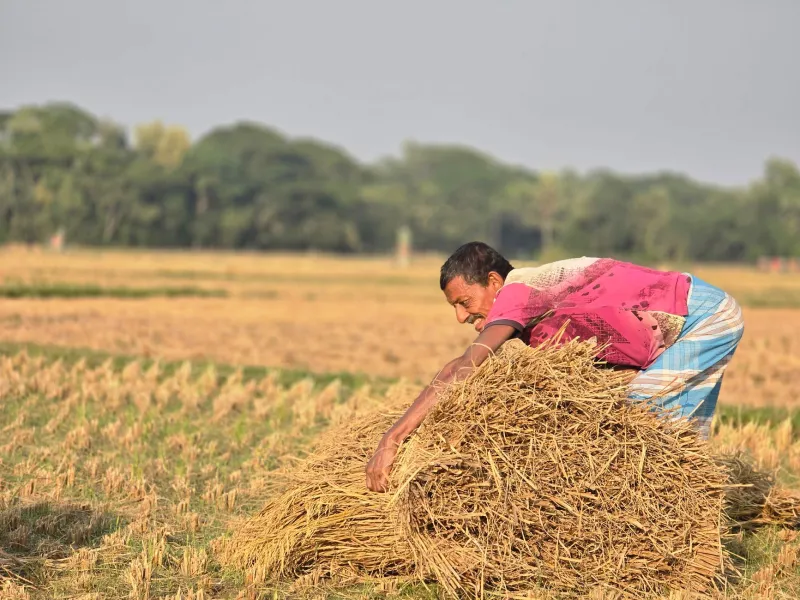
There is something deeply disorienting about pulling a record harvest from your fields and still ending the season in the red. Yet that is precisely the reality confronting a growing number of American hemp farmers in 2024. The agronomic story of domestic hemp cultivation has never been more promising. Breeding programs have delivered hardier cultivars, precision agriculture techniques have improved per-acre output, and years of accumulated growing experience mean that crop failures from rookie mistakes are increasingly rare. The agricultural science, in other words, is working.
The economics, however, are not.
For many mid-scale producers—those operating somewhere between a boutique specialty farm and a vertically integrated enterprise—the hemp sector has quietly transformed from a frontier opportunity into something resembling a trap. The more efficiently they grow, the more they contribute to the very oversupply dynamic that depresses the prices they receive. It is a paradox that agricultural economists recognize well, but one that the hemp industry, in its youthful enthusiasm, largely failed to anticipate.
The Price Collapse Nobody Wanted to Talk About
At the height of the post-Farm Bill boom following 2018, CBD-rich hemp biomass was fetching prices that made even skeptical row-crop farmers take serious notice. Spot prices for quality dried flower reached extraordinary highs, and processors were actively courting growers with contract offers that seemed almost too good to be true. In many cases, they were.
By the early 2020s, a wave of new cultivation acreage—much of it encouraged by those very contract promises—had flooded the market with supply that demand could not absorb. Wholesale biomass prices collapsed. Flower that once commanded premium rates began trading at fractions of earlier benchmarks. According to industry tracking data compiled by the Hemp Benchmarks report, CBD biomass prices fell by more than 80 percent between 2019 and 2022, a decline so steep and so swift that it effectively wiped out the business models of thousands of operations that had borrowed against those earlier projections.
The farmers who survived that initial shakeout did so largely through adaptation—pivoting to grain and fiber production, securing niche retail relationships, or absorbing losses while waiting for the market to stabilize. But stabilization has proven elusive, and the structural pressures driving price suppression have not disappeared. They have, in many respects, intensified.
The Consolidation Problem
One of the least-discussed drivers of farmer margin compression is the accelerating consolidation of hemp processing infrastructure. Processing—whether that means decorticating fiber, extracting cannabinoids, or cleaning and packaging grain—represents the critical bottleneck between a raw agricultural product and a commercially viable commodity. Farmers who lack access to processing either sell biomass at heavily discounted rates or watch their harvests degrade in storage.
As smaller and mid-tier processors have struggled financially or been absorbed by larger competitors, the number of viable buyers in many regional markets has contracted sharply. This consolidation is not merely a matter of fewer options; it is a matter of negotiating power. When a farmer in rural Kentucky or Colorado's San Luis Valley has access to only one or two processors within a viable transportation radius, those processors effectively set the market price. The farmer, regardless of how excellent the crop, has little leverage.
This dynamic mirrors patterns seen in other agricultural sectors—poultry, hog production, and certain grain markets—where consolidation of downstream infrastructure has historically transferred economic value away from producers and toward processors and distributors. Hemp, despite its reputation as a disruptive and democratizing crop, is not immune to these structural forces.
Who Gets Squeezed First
The producers feeling this pressure most acutely tend to be those operating at the mid-scale: too large to survive on direct-to-consumer relationships alone, too small to invest in their own processing capacity or to negotiate favorable long-term contracts. Small boutique farms serving local markets or maintaining loyal online customer bases retain some insulation. Large, vertically integrated operations that control their own extraction, processing, and brand distribution are largely protected. The middle, as so often happens in American agriculture, is where the pain concentrates.
For many of these producers, the calculation has become brutally simple. Input costs—seeds, soil amendments, labor, irrigation, compliance testing, licensing fees—have remained stubbornly high or increased. Revenue per pound has declined. The margin between those two lines has, in many cases, turned negative. Some farmers have exited the hemp sector entirely, returning to conventional commodity crops despite their own environmental misgivings. Others are holding on, hoping that regulatory clarity around hemp-derived cannabinoids, or expanding industrial demand for fiber and grain, will eventually rebalance the equation.
Structural Remedies Worth Considering
If hemp is to fulfill its promise as a regenerative, climate-resilient, economically viable alternative for American farmers, the industry requires structural interventions—not merely optimistic projections about future demand.
Several approaches merit serious consideration. First, investment in distributed, farmer-accessible processing infrastructure—potentially through cooperative ownership models or USDA-backed financing—could meaningfully reduce the leverage that consolidated processors currently hold over growers. Cooperative processing facilities, in particular, have demonstrated their value in other agricultural sectors and could provide mid-scale hemp producers with the kind of downstream access that currently eludes them.
Second, the development of robust, standardized commodity markets for hemp grain and fiber—analogous to the futures markets that exist for soybeans or cotton—would provide price transparency and hedging tools that currently do not exist in a meaningful form. Farmers operating without forward price visibility are, in effect, gambling on every planting decision.
Third, federal and state agricultural policy needs to catch up with the reality of hemp as an established crop rather than an experimental novelty. USDA crop insurance programs, farm loan structures, and conservation incentive frameworks have been slow to fully incorporate hemp in ways that reflect its agronomic and environmental value. Addressing those gaps would reduce the financial risk that currently deters many farmers from committing to the crop at scale.
The Cost of Getting This Wrong
The stakes extend beyond the balance sheets of individual farm operations. Hemp's potential contributions to regenerative agriculture—its capacity to rebuild soil organic matter, reduce synthetic input dependency, and sequester atmospheric carbon—are not realized when farmers are priced out of growing it. A market structure that systematically transfers wealth away from producers and toward consolidated processors is not just economically unjust; it is ecologically counterproductive.
The farmers who have invested years in learning how to grow hemp well, who have built relationships with their land and their local communities around this crop, represent an irreplaceable form of agricultural knowledge. Losing them to a market failure—not an agronomic one—would be a serious and largely unnecessary setback for the broader project of building a more sustainable American food and fiber system.
Record yields should be cause for celebration. The fact that they are not tells us something important about where the real work still needs to be done.