Buried in Journals, Absent from Fields: How America's Hemp Research Never Arrives Where It Matters Most
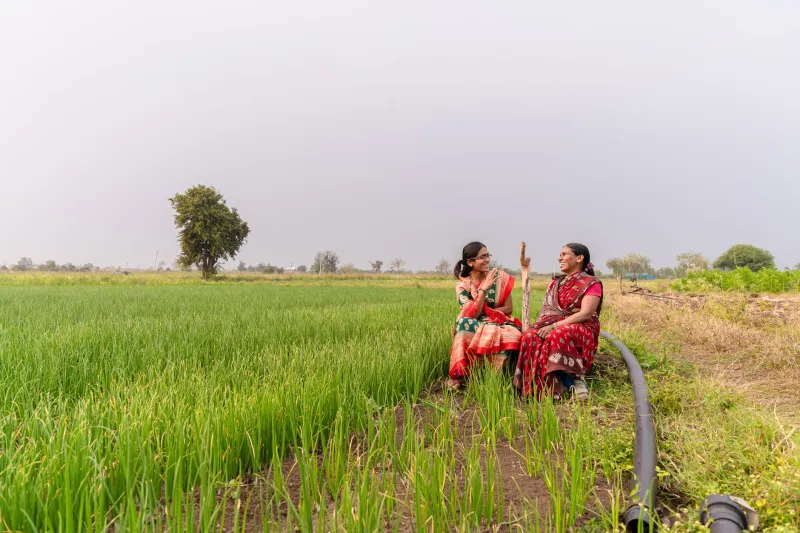
Every growing season, hemp farmers across the United States make critical decisions — about pest control, soil amendments, planting density, and harvest timing — based on incomplete information. Not because the science doesn't exist. It does. In many cases, it exists in peer-reviewed journals, university extension databases, and agricultural research station reports that most working farmers will never read, never encounter, and never have the time to translate into on-farm practice.
This is the lab-to-acre problem. And it is costing American agriculture one of its most promising regenerative crops.
A Research Ecosystem That Talks to Itself
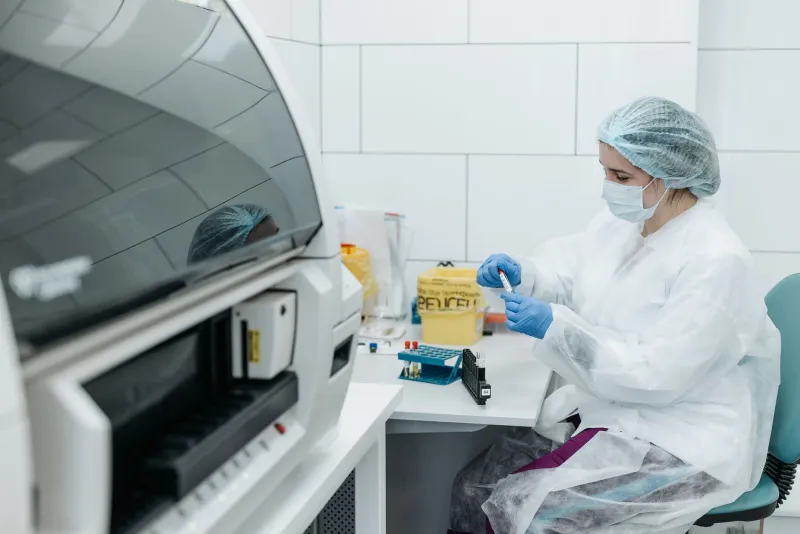
Since the 2018 Farm Bill restored hemp as a legal agricultural commodity, public funding for hemp-related research has grown — cautiously, incrementally, but meaningfully. The USDA's National Institute of Food and Agriculture has funded studies on cannabinoid biosynthesis, fiber yield optimization, and hemp's role in integrated pest management systems. Land-grant universities from Kentucky to Oregon have stood up dedicated hemp research programs. Peer-reviewed findings on soil microbiome interactions, water use efficiency, and heavy metal phytoremediation have accumulated in scientific literature at a pace that would have been unthinkable a decade ago.
But the pathway from those published findings to a farmer standing in a field in rural Tennessee or central Colorado is broken — structurally, institutionally, and in some cases, by design.
The academic incentive structure rewards publication, not implementation. A researcher who produces a study demonstrating that specific mycorrhizal inoculants can increase hemp biomass yields by 18 percent has fulfilled their professional obligation once that paper clears peer review. Whether a farmer in the Ohio River Valley ever learns about that finding is, quite literally, someone else's problem.
Extension Services: Underfunded, Overstretched, and Largely Unprepared
In theory, the cooperative extension system — the network of land-grant university outreach programs operating in every state — exists precisely to bridge the gap between research and practice. Extension agents are supposed to translate complex agricultural science into actionable guidance for working farmers. For established commodity crops like corn, soybeans, and cotton, this system functions reasonably well, supported by decades of institutional knowledge and robust industry investment.
For hemp, extension services remain woefully underprepared. Many state extension offices are still developing basic hemp literacy among their agents. Workshops on hemp cultivation fundamentals — the kind of programming that would have been routine for legacy crops generations ago — are only now being organized in states where hemp acreage has been growing for years. Specialized guidance on pest identification, variety selection for specific end markets, or soil preparation protocols for hemp rotations remains inconsistent, geographically uneven, and chronically underfunded.
The result is a paradox: farmers pioneering hemp cultivation in regions with genuine agronomic potential are operating with less practical support than farmers growing almost any other legal crop in America.
The Data Stays Upstream
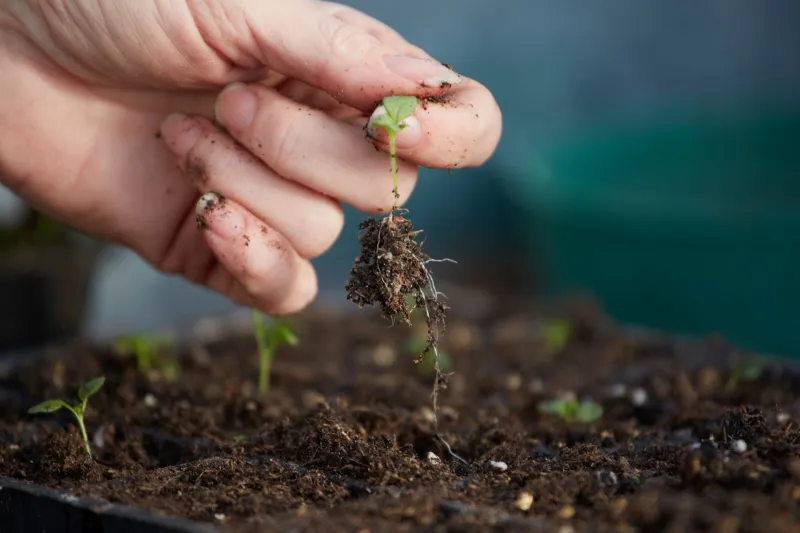
Consider what is known, scientifically, about hemp's relationship with soil health. Research published in multiple peer-reviewed journals has documented hemp's capacity to suppress certain soil-borne pathogens, stimulate beneficial fungal networks, and reduce compaction through deep taproot development. Studies conducted at experiment stations in Vermont and Kentucky have quantified the nitrogen-sparing effects of hemp in rotation with corn, offering data directly relevant to farmers managing input costs.
None of this information is secret. All of it is technically accessible. But accessibility in an academic database and accessibility to a farmer managing a 200-acre operation while navigating fluctuating commodity prices, equipment maintenance, and labor shortages are entirely different conditions.
Farmers need condensed, practical, field-tested guidance — not 30-page methodology sections and confidence intervals. They need demonstration plots in their counties, not citations from experiment stations in different climate zones. They need extension agents who can walk a field with them and connect what they're seeing in the soil to what the science says — not a PDF attached to a newsletter they didn't subscribe to.
Industry Fills the Void — With Mixed Results
When public infrastructure fails, private interests move in. Seed companies, input suppliers, and vertically integrated hemp processors have stepped into the guidance vacuum, offering cultivation recommendations, agronomic support, and technical assistance to farmers who have nowhere else to turn. In some cases, this has worked reasonably well. In others, it has produced advice calibrated less to the farmer's agronomic success than to the vendor's commercial interests.
A seed company recommending its own proprietary varieties — regardless of whether those varieties are optimally suited to a given region's climate, soil type, or end-market requirements — is not a neutral information source. Neither is a processor offering cultivation guidance that happens to align with the crop specifications that benefit their own supply chain. Farmers relying primarily on commercially motivated guidance are operating without the independent, science-based support that public agricultural infrastructure is supposed to provide.
This is not an indictment of every private actor in the hemp supply chain. Many have contributed genuinely useful knowledge. But the absence of robust, independent, publicly funded extension support leaves farmers disproportionately dependent on sources with structural conflicts of interest.
What a Functional System Would Look Like
Closing the lab-to-acre gap requires more than publishing more research. It requires rebuilding the connective tissue between scientific institutions and farming communities — deliberately, with adequate funding, and with a clear mandate to prioritize farmer outcomes.
That means dedicated hemp extension specialists in every major hemp-producing state, with the agronomic depth to interpret current research and the field credibility to earn farmer trust. It means demonstration farm networks that translate controlled experiment findings into regionally specific, practically observable results. It means plain-language research summaries — produced not as afterthoughts but as required deliverables for publicly funded studies. And it means farmer advisory panels embedded in the research design process itself, ensuring that the questions being studied are the questions farmers actually need answered.
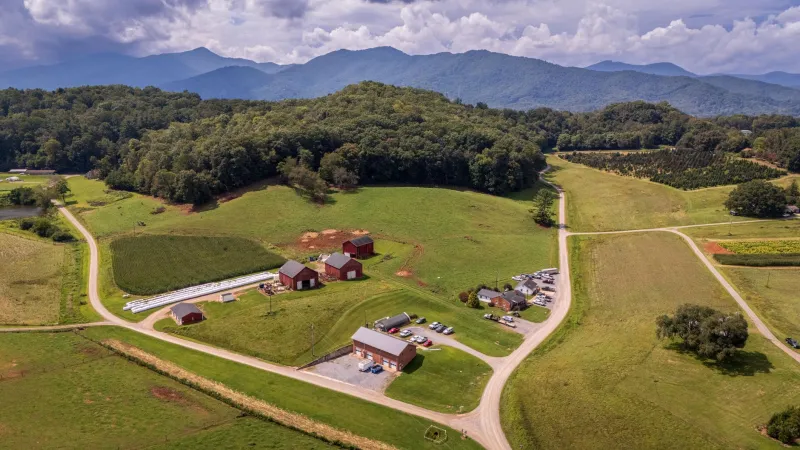
Several states are beginning to move in this direction. Colorado's hemp pilot program has incorporated farmer feedback loops into its research agenda. Kentucky's agricultural extension infrastructure, with its deep institutional history in hemp, has made meaningful investments in practical outreach. These examples exist. They are not yet the norm.
The Cost of Continued Disconnection
Hemp's regenerative potential — its documented capacity to rebuild degraded soils, reduce synthetic input dependency, and diversify agricultural systems toward greater ecological resilience — is not theoretical. It is supported by a growing body of credible science. But potential unrealized is potential wasted.
Every season that peer-reviewed discoveries about pest resistance, cover cropping integration, or yield optimization remain inaccessible to working farmers is a season of foregone progress. It is soil that could have been rebuilt but wasn't. It is rotations that could have reduced synthetic nitrogen applications but didn't. It is a crop with genuine transformative capacity, stalled not by scientific limitations but by institutional failure.
The research exists. The farms exist. The gap between them is not inevitable — it is a policy choice, and it can be reversed.