Mapped Abroad, Monetized Overseas: How Foreign Labs Are Winning the Hemp Genome Race America Started
There is a particular kind of loss that arrives without fanfare — no announcement, no ceremony, no moment of obvious defeat. It accumulates in the gap between a published research paper and a filed patent application, between a university press release and a commercial licensing agreement signed in Geneva or Guelph. That is precisely the kind of loss the United States is currently sustaining in hemp genomics, and it is costing American farmers far more than most policymakers appear willing to acknowledge.
American scientists have done meaningful, often pioneering work in mapping the Cannabis sativa genome. Yet a pattern has emerged with troubling consistency: discoveries originating in or adjacent to U.S. institutions are being translated into intellectual property by Canadian and European research programs that operate with clearer mandates, more reliable funding, and institutional cultures better calibrated for commercialization.
The Funding Asymmetry Nobody Talks About
To understand how this happened, it helps to look at the numbers. Canada's federal government has channeled sustained agricultural research investment through agencies like Agriculture and Agri-Food Canada, while provincial governments in Ontario and British Columbia have backed hemp genomics with dedicated grant streams. The European Union's Horizon research framework has similarly financed multi-institutional hemp genetics consortia across France, the Netherlands, and Germany — countries with long traditions of industrial hemp cultivation that never experienced the prohibition-era disruption that paralyzed American research for decades.
In the United States, federal hemp research funding has been fragmented, inconsistent, and perpetually entangled in the residual stigma of the Controlled Substances Act classification that the 2018 Farm Bill only partially resolved. The U.S. Department of Agriculture has expanded its hemp research programs since legalization, but the scale remains modest relative to what competitor nations are committing. University researchers working on hemp genomics frequently piece together funding from state agriculture departments, small competitive grants, and private industry partnerships — arrangements that introduce both instability and conflict-of-interest complications that can impede patent filing.
The Institutional Incentive Problem
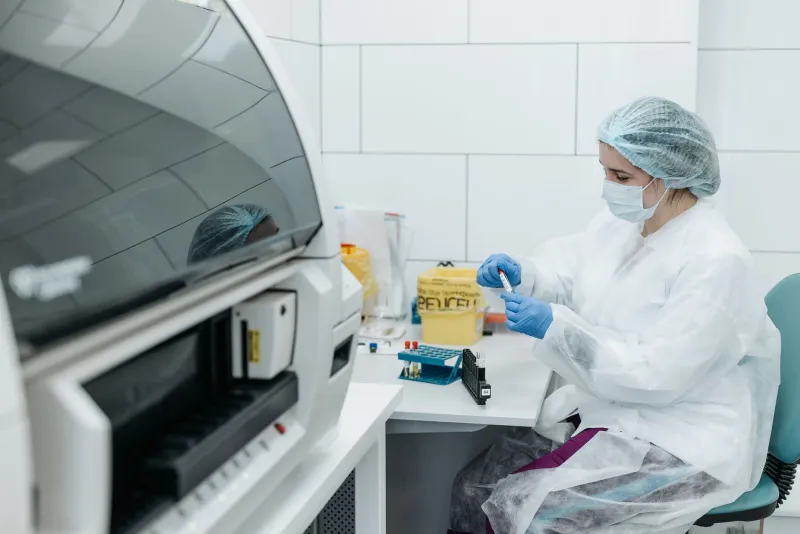
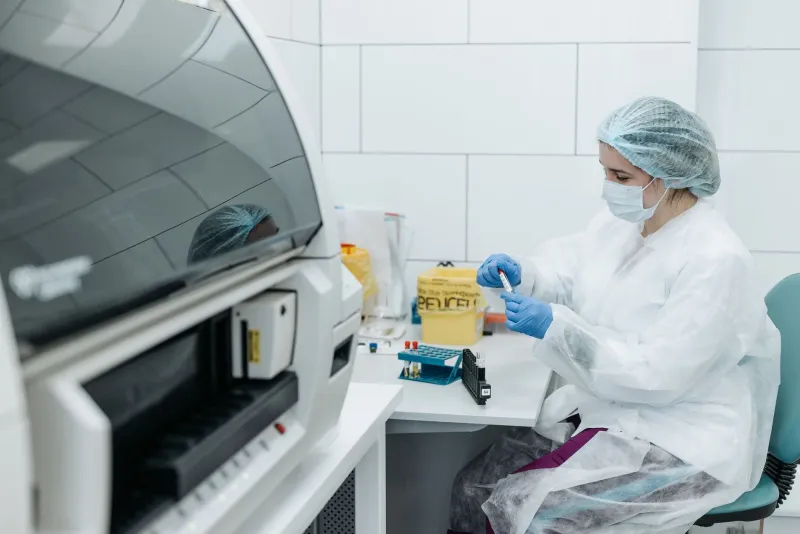
Funding disparities alone do not fully explain the patent gap. The structure of American academic incentives plays an equally significant role. University researchers in the United States are evaluated and promoted primarily on publication records. A landmark paper on hemp terpene biosynthesis pathways or cannabinoid gene expression, published in a high-impact journal, advances a scientist's career in ways that a patent application — slower, more expensive, and requiring institutional legal resources — often does not.
Canadian and several European institutions have restructured their technology transfer offices to function more aggressively and more collaboratively with researchers. Some have introduced financial incentives that reward faculty for moving discoveries toward commercialization. American universities, with notable exceptions, have technology transfer offices that are chronically understaffed and reactive rather than proactive — often engaging with a discovery only after a researcher has already published results that, once public, significantly complicate patent eligibility.
The sequence matters enormously. Publish first, and you may forfeit the right to patent entirely. File first, and you protect the downstream commercial value of the science. Foreign institutions have internalized this logic in ways that many American land-grant universities have not.
What Is Actually Being Lost
The practical stakes extend well beyond academic prestige. Hemp genetic intellectual property governs access to improved seed varieties — cultivars bred for specific fiber lengths, cannabinoid profiles, drought tolerance, or pest resistance. If the patents on those traits are held by Canadian seed companies or European agricultural conglomerates, American farmers will pay licensing fees to grow them. American processors building supply chains around specific genetic characteristics will negotiate from positions of dependency rather than ownership.
This is not a hypothetical. It is already occurring in analogous agricultural sectors. American farmers pay royalties on patented soybean and corn traits developed partly through publicly funded research — a dynamic that has drawn sustained criticism from agricultural economists and rural advocacy groups for decades. Hemp is young enough as a legal crop that the United States still has a window to establish domestic genetic sovereignty. That window is narrowing.
Several hemp cultivar patents filed in recent years by Canadian entities cover traits — including specific cannabidiol-to-tetrahydrocannabinol ratios and fiber density characteristics — that American university researchers had published data on, in some cases years earlier. The research existed. The protection did not follow.
The Policy Gaps Enabling the Drain
Federal policy has not kept pace with the scientific opportunity. The USDA's hemp pilot programs generated valuable agronomic data, but the research mandate was not paired with a coordinated intellectual property strategy. There is no federal program equivalent to what some nations have established — a dedicated hemp genomics initiative with built-in commercialization pathways, cross-institutional coordination, and legal resources to support patent filing.
State-level programs have attempted to fill the void. Kentucky, Colorado, and North Carolina have invested in hemp research infrastructure, and some state universities have begun developing more assertive technology transfer strategies around hemp-related discoveries. But state efforts, however earnest, cannot substitute for the federal coordination that would allow American institutions to compete at the scale Canadian and European programs are operating.
There is also a regulatory complication unique to the United States. Because hemp remained a Schedule I substance until recently, federal research funding was effectively prohibited for years, creating a gap in the scientific literature that competitors used productively. The scientists who did work on Cannabis sativa genetics during prohibition-era years often did so under restricted conditions, with limited institutional support, and with virtually no pathway to commercialization. That legacy continues to disadvantage American programs even now that the legal landscape has shifted.
A Recoverable Position — If the Will Exists
None of this is irreversible. The American research infrastructure — its land-grant universities, its agricultural experiment stations, its network of federal research facilities — remains formidable. The scientific talent is present. What is missing is the policy architecture and institutional commitment to translate that talent into protected, commercially viable genetic assets that serve American farmers rather than foreign patent holders.
Congressional action to establish a coordinated national hemp genomics program, modeled in part on successful foreign frameworks but tailored to American institutional realities, would represent a meaningful step. Paired with reformed technology transfer incentives at universities receiving federal agricultural research funding, such a program could begin reversing the current trajectory.
For American hemp farmers watching input costs rise and market access remain constrained, the genome race may seem abstract — a concern for scientists and lawyers rather than growers. But the varieties they will plant in a decade, and the royalties they will or will not pay to grow them, are being determined right now, in laboratories in Wageningen and Guelph and Montpellier. The United States helped build the scientific foundation those laboratories are standing on. It is past time to start building something lasting on top of it.