Walls of Doubt: Why American Builders Keep Rejecting a Carbon-Negative Material That Europe Has Trusted for Decades
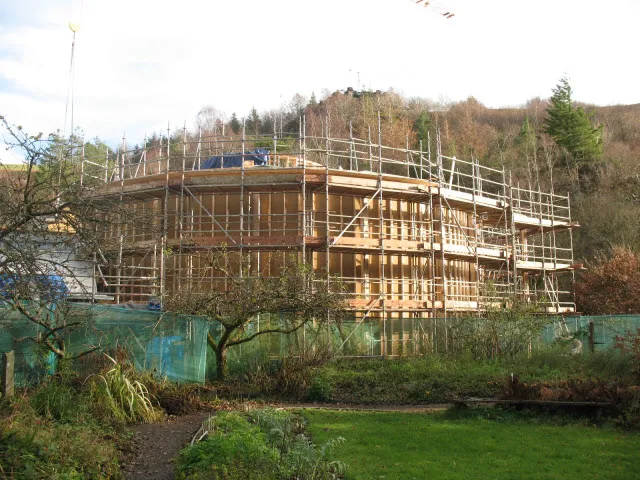
Photo: Stephen Craven, CC BY-SA 2.0, via Wikimedia Commons
In the French countryside, hempcrete walls built in the early 1990s are still standing — not merely standing, but performing. They regulate interior humidity, resist mold, sequester carbon, and maintain thermal comfort without the energy penalties that plague conventional construction. Across the United Kingdom, Germany, and the Netherlands, builders have long since moved hempcrete from the experimental column into the standard toolkit. Yet in the United States, a country confronting both a housing affordability crisis and an escalating climate emergency, this material remains stubbornly marginal. The science does not explain the hesitation. Something else does.
What the Science Actually Says
Hempcrete is a biocomposite material produced by combining the woody inner core of the hemp stalk — known as the hurd or shiv — with a lime-based binder and water. The resulting mixture is neither a structural concrete nor a simple insulator. It occupies a category of its own: a vapor-permeable, thermally massive wall system that simultaneously sequesters the carbon absorbed by the hemp plant during its growth cycle.
Research published in peer-reviewed construction journals has confirmed that hempcrete walls carry a negative embodied carbon footprint over their service life. A 2022 analysis from the University of Bath estimated that a standard hempcrete wall panel sequesters roughly 35 kilograms of CO₂ per square meter — a figure that stands in stark contrast to the substantial carbon debt incurred by steel, concrete, and even conventional timber framing. Its thermal performance rivals mineral wool insulation. Its resistance to fire, pests, and moisture damage exceeds that of many petroleum-derived materials currently specified without question by American architects.
The science, in other words, has already rendered its verdict. The problem lies elsewhere.
The Regulatory Maze That Greets Every Builder
In the United States, building materials earn market access through a labyrinth of code compliance pathways. The International Building Code, adopted in modified form by most states, does not currently include a formal classification for hempcrete as a structural or insulating wall system. This absence does not mean hempcrete is prohibited — but it does mean that every builder who chooses it must navigate a project-by-project approval process that can add months of delay and thousands of dollars in engineering fees.
For a small contractor operating on thin margins, that calculus is prohibitive. A material that requires a variance application, a third-party structural review, and potentially a meeting with a skeptical local building official is, in practice, a material that gets quietly crossed off the specification sheet before the client ever hears about it.
Advocates have been pushing for hempcrete's inclusion in the International Residential Code since at least 2015. Progress has been incremental. A proposal to add hemp-lime construction as a recognized wall assembly advanced through committee review in the most recent IRC update cycle, reflecting growing momentum — but full codification across all US jurisdictions remains years away. Until that codification arrives, the regulatory friction will continue to function as a de facto prohibition for the majority of builders.
The Economic Arithmetic of a Nascent Supply Chain
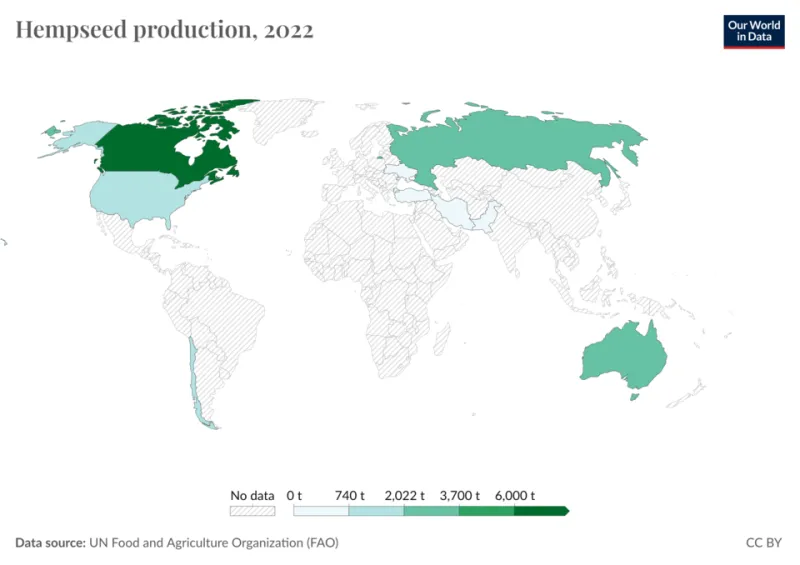
Even builders willing to absorb the regulatory complexity face a second obstacle: cost. Because domestic hemp processing infrastructure remains underdeveloped, the hurd required for hempcrete production is frequently imported from Canada or Europe, adding freight costs that make the material difficult to price competitively against fiberglass batts or spray foam. American farmers have grown hemp at scale since the 2018 Farm Bill reopened that possibility, but the processing facilities needed to clean, decorticate, and grade hemp hurd for construction applications have not materialized at the pace the industry requires.
This is not a failure of agricultural potential. It is a failure of downstream investment. Hemp processors capable of producing construction-grade hurd at volume exist in pockets — notably in Colorado, Kentucky, and the Carolinas — but the network is thin and geographically uneven. A builder in Phoenix or Minneapolis cannot reliably source consistent material on a predictable timeline, and that unreliability makes hempcrete an impossible specification for anything beyond a custom project with a client willing to accept schedule risk.
The Psychology of Construction Culture
Beneath the regulatory and economic barriers lies something harder to legislate away: the profound conservatism of American building culture. Construction professionals operate in a liability-saturated environment where the safest professional decision is almost always to specify what was specified last time. When a roof leaks or a wall cracks, the contractor who chose an unfamiliar material bears disproportionate professional and legal exposure. The incentive structure actively punishes innovation.
This dynamic is not unique to hempcrete. It has slowed the adoption of cross-laminated timber, structural insulated panels, and virtually every other material that challenged the post-war orthodoxy of stick framing and poured concrete. But hempcrete carries an additional stigma: its association with cannabis. Despite the legal and botanical distinction between industrial hemp and marijuana — a distinction now recognized in federal law — the word "hemp" still triggers reflexive skepticism in some corners of the industry. Builders have reported clients withdrawing interest the moment the material's origin is explained, and a handful of local officials have raised objections rooted more in cultural discomfort than technical concern.
The Builders Who Are Breaking Through
None of this has stopped a growing cohort of American builders from proving the concept at scale. In Asheville, North Carolina, a construction firm called Hempitecture has completed dozens of hempcrete installations, ranging from residential renovations to commercial interiors, working methodically through the variance process and documenting performance data that it shares openly with the broader industry. In Vermont, a passive house designer has incorporated hempcrete into a net-zero affordable housing prototype, demonstrating that the material's economics improve substantially when its long-term energy savings are factored into lifecycle cost analysis.
These practitioners share a common strategy: they do not fight the regulatory system, they feed it. Every completed project becomes a case study. Every performance data point becomes ammunition for the next code committee meeting. They are building, brick by brick, the evidentiary record that will eventually make hempcrete too well-documented to ignore.
What Policy Must Do Next
The federal government has a role to play that it has not yet fully accepted. USDA investment in hemp processing infrastructure — modeled on the loan guarantee programs that supported the early ethanol industry — could unlock the domestic supply chain that makes hempcrete economically viable at regional scale. The Department of Energy's building technology programs could fund the large-scale performance monitoring that accelerates code recognition. And Congress could direct the National Institute of Standards and Technology to develop standardized testing protocols specifically for bio-based composite wall systems, removing the ambiguity that currently forces every builder to start from scratch.
At the state level, the most impactful action would be the adoption of pre-approved hempcrete wall assemblies by state building departments in major hemp-producing states. Kentucky, Colorado, and North Carolina are positioned to lead. A single state-level approval, properly documented and publicized, would reduce the project-by-project regulatory burden for every builder within that jurisdiction and signal to the broader industry that the era of treating hempcrete as experimental is over.
A Material the Climate Cannot Afford to Waste
The built environment accounts for approximately 40 percent of US carbon emissions when construction and operational energy are combined. Decarbonizing that sector requires every available tool — and hempcrete is a tool that sequesters carbon while simultaneously reducing the energy load on the buildings it encloses. The barriers to its adoption are not scientific. They are institutional, cultural, and economic. Each of those categories is, in principle, amenable to change.
The question is whether the American construction industry will wait for change to arrive on its own schedule, or whether builders, policymakers, and advocates will choose to accelerate it. The walls of doubt are real. But they are not, it turns out, load-bearing.