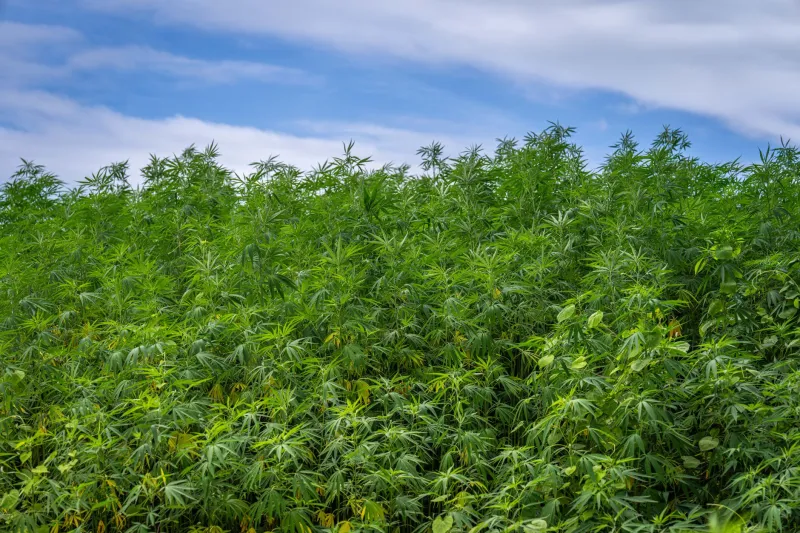
Pulped by Policy: The Century-Old Decision That Keeps Hemp Paper Out of America's Printers
Every year, American paper mills consume the equivalent of roughly 4 billion trees. Forests across the Southeast and Pacific Northwest are clear-cut, chipped, and chemically digested into the office paper, packaging, and newsprint that flow through the economy. Meanwhile, a fiber that can produce four times the paper per acre as a mature forest — hemp — accounts for a rounding error of domestic paper production.
This is not a story about technological failure. It is a story about policy, and one written nearly a century ago.
How Hemp Was Written Out of the Story
In the 1930s, hemp papermaking was on the cusp of commercial viability. Mechanical decortication — the process of separating hemp's strong bast fibers from its woody core — had just become efficient enough to compete with wood pulp. Popular Mechanics famously ran a piece in 1938 heralding hemp as a "billion dollar crop."
Then came the Marihuana Tax Act of 1937. By imposing burdensome taxes, stamps, and reporting requirements on all cannabis cultivation, the law made hemp economically unworkable for farmers and processors alike. The paper industry, which had already invested heavily in wood-pulp infrastructure and timberland holdings, had no incentive to fight for the alternative. Hemp never recovered. Even after the 2018 Farm Bill re-legalized the crop, the mills, the supply chains, and the institutional knowledge had long since atrophied.
The Economics That Still Favor Timber
The case for hemp paper is not that it is currently cheaper — it isn't. Wood pulp benefits from nearly a century of subsidized timber roads, optimized supply chains, and capital-intensive mills amortized over decades. Hemp pulp processing remains boutique: few US facilities can decorticate at scale, and most hemp paper sold domestically is manufactured abroad from imported fiber.
But the comparison changes when externalities enter the ledger. Hemp reaches harvest in 90 to 120 days, requires no replanting of a forest that takes decades to regrow, and can be pulped with less aggressive chemical treatment than wood. Its long bast fibers also yield durable specialty papers — currency, filter paper, archival stock — where hemp already dominates in other countries.
The Mills Willing to Try
A handful of American pioneers are testing the waters. Small-scale mills in Colorado and Kentucky have experimented with hemp-blend stationery and packaging, while entrepreneurs in the Great Plains have proposed regional decortication hubs to feed pulp markets. Their constraint is predictable: without guaranteed fiber supply, mills won't invest; without mills, farmers won't grow fiber hemp. The chicken-and-egg problem is precisely the kind of market failure public policy exists to solve.
What Would Tip the Scales
Three changes could move hemp pulp from the sidelines:
- Federal procurement. A directive requiring a modest percentage of government paper purchases to come from domestically grown hemp would create guaranteed demand overnight — the same way federal procurement seeded other strategic industries.
- Research parity. Land-grant universities receive substantial funding for forestry and wood science. Comparable investment in fiber hemp agronomy and pulping chemistry would close the knowledge gap.
- Processing infrastructure grants. Decortication capacity is the bottleneck. Targeted USDA support for regional processing facilities would connect growers to the markets waiting for them.
America's forests are a renewable resource only when harvested at a rate nature can sustain. At 4 billion trees a year, we are drawing down a national asset to avoid revisiting a policy mistake made in 1937. The paper trail leads directly back to Washington. It is past time to follow it.