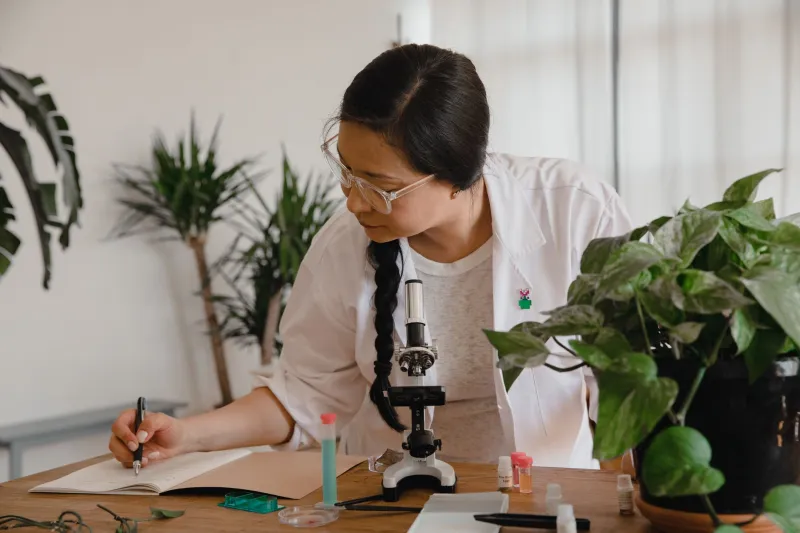
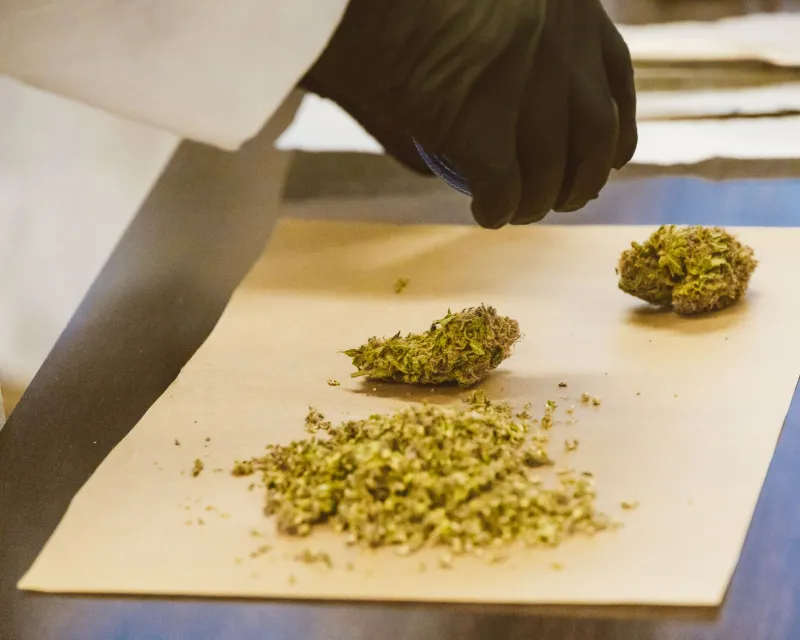
Small Science, Big Discoveries: How Biotech Startups Are Unlocking Hemp's Pharmaceutical Frontier While Big Pharma Looks Away
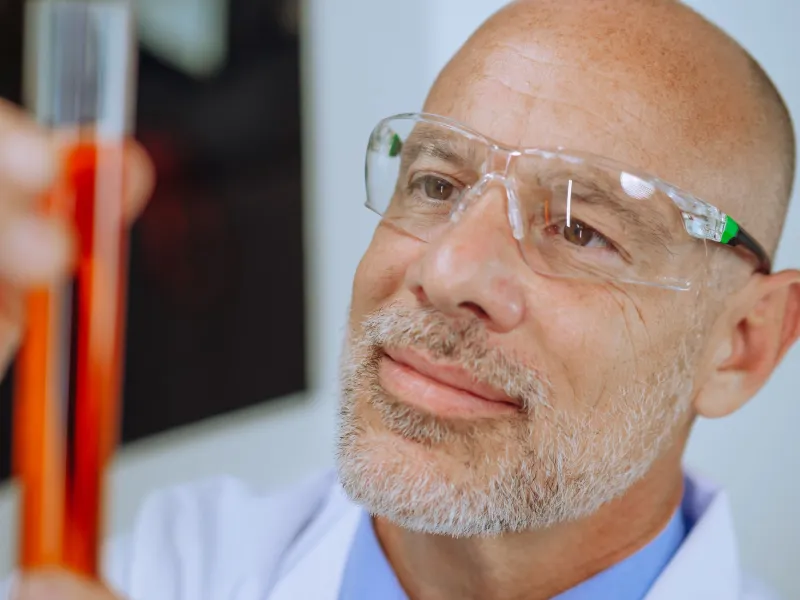
For decades, the pharmaceutical industry's relationship with cannabis-derived compounds has been defined more by legal caution than scientific curiosity. The approval of GW Pharmaceuticals' Epidiolex in 2018 — a purified CBD formulation for rare childhood epilepsies — was widely celebrated as a breakthrough, and it was. But it was also, in a meaningful sense, a ceiling. Major pharmaceutical corporations largely interpreted that milestone as the outer boundary of what hemp-derived medicine could practically deliver, rather than as an opening into a much wider chemical landscape. Smaller players have since decided to explore that landscape themselves.
What those players are finding is extraordinary.
Hemp's Chemical Library Is Far Larger Than Most People Realize
The popular imagination tends to reduce hemp's pharmacological profile to two compounds: CBD and THC. That reduction is a profound underestimation. Cannabis sativa — the species that includes both hemp and its higher-THC relatives — produces more than 140 identified phytocannabinoids, along with hundreds of terpenes, flavonoids, and other bioactive molecules. Many of these compounds have never been studied in any rigorous clinical context. Several have never been isolated in sufficient quantities to study at all.
Researchers at institutions including the University of Mississippi's National Center for Natural Products Research and several land-grant universities have begun cataloguing this molecular diversity with a seriousness the field previously lacked. Their findings suggest that the plant's therapeutic potential extends well beyond the nervous system applications that first attracted mainstream attention. Anti-inflammatory pathways, metabolic regulation, antimicrobial activity, and even preliminary oncological signals have all appeared in preclinical data.
For biotech startups operating at the intersection of plant biochemistry and drug development, this represents something close to a gold rush — one conducted in laboratories rather than fields.
The Compounds Drawing the Most Attention
CBG, or cannabigerol, is perhaps the most discussed of the lesser-known cannabinoids currently in active development. Often described as the "stem cell" of hemp's chemical family because it serves as a biosynthetic precursor to other cannabinoids, CBG has demonstrated meaningful antibacterial properties in laboratory settings, including activity against methicillin-resistant Staphylococcus aureus — a pathogen that costs the American healthcare system billions of dollars annually. A small number of biotech firms, including Cansativa Group and several US-based startups operating under research licenses, are pursuing CBG-derived formulations with particular urgency.
CBN, or cannabinol, has attracted separate interest for its apparent sedative and neuroprotective properties. Unlike CBD, which is abundantly present in hemp biomass, CBN occurs in smaller concentrations and requires more sophisticated extraction and stabilization processes. Companies such as Cardiol Therapeutics and a cluster of venture-backed American startups have invested in proprietary methods to produce CBN at pharmaceutical grade — a prerequisite for any serious clinical trial pathway.
Perhaps more intriguing are the minor cannabinoids that have received almost no public attention at all. CBDV, or cannabidivarin, has shown early promise in autism spectrum disorder research, with a Phase 2 clinical trial conducted by GW Pharmaceuticals producing mixed but scientifically interesting results. THCV, or tetrahydrocannabivarin, has drawn attention from metabolic disease researchers for its apparent effects on insulin sensitivity and appetite regulation — a profile that, if confirmed in human trials, would position it as a meaningful tool in addressing America's type 2 diabetes crisis.
Why Large Pharmaceutical Companies Have Stayed on the Sidelines
The reluctance of major pharmaceutical corporations to pursue these compounds aggressively is not primarily a scientific judgment. It is an economic and regulatory one.
Developing a novel drug through the FDA's full approval process requires, on average, more than a decade of work and upward of two billion dollars in investment. For that investment to make sense, a company needs a clear path to intellectual property protection, a defined regulatory category, and a market large enough to generate returns at scale. Hemp-derived compounds create complications on all three fronts.
Patent protection for naturally occurring plant molecules is legally contested. The DEA's scheduling framework still treats certain hemp derivatives with a suspicion that creates compliance headaches for researchers and manufacturers alike. And because many of the conditions these compounds might address — chronic pain, anxiety, metabolic dysfunction — are already served by existing pharmaceutical products, large corporations face the uncomfortable prospect of cannibalizing their own revenue streams.
Smaller biotech firms, operating with venture capital rather than shareholder obligations, are less constrained by these calculus problems. They can accept longer timelines, tolerate regulatory ambiguity, and pursue market niches that a major pharmaceutical company would consider insufficiently profitable.
The Barriers That Still Stand Between Discovery and Patient Care
None of this progress should be mistaken for imminent clinical availability. The path from preclinical promise to approved therapeutic is long, expensive, and littered with compounds that performed brilliantly in laboratory settings and failed in human trials.
The most significant structural barrier facing hemp-derived drug development in the United States remains the Schedule I classification of cannabis under the Controlled Substances Act. Although hemp itself was federally descheduled under the 2018 Farm Bill, the legal definition of hemp — containing no more than 0.3 percent delta-9 THC by dry weight — creates a narrow and sometimes arbitrary boundary that complicates research involving any compound derived from higher-THC plant material. Researchers studying THCV, for instance, often must source material from Schedule I-classified cannabis, triggering DEA licensing requirements that can delay laboratory work by months or years.
Funding structures compound the problem. The National Institutes of Health has historically directed cannabis research toward understanding harm and addiction rather than therapeutic potential. That emphasis is slowly shifting, but the pipeline of federally funded hemp pharmacology research remains thin relative to the scientific opportunity.
Then there is the matter of clinical trial infrastructure. Conducting human trials on hemp-derived compounds requires institutional review board approval, access to pharmaceutical-grade material, and a regulatory sponsor willing to engage with the FDA on a pathway that is still, in many respects, being written in real time. For startups operating on limited capital, each of these requirements represents a potential termination point.
What the Next Decade Could Look Like
The scientific community is not waiting for regulatory clarity to arrive fully formed. Researchers are publishing, startups are raising capital, and a small but growing number of hemp-derived compounds are advancing through early-phase trials. The DEA's recent rescheduling of cannabis to Schedule III — if finalized — would meaningfully reduce the administrative burden on researchers and could accelerate the timeline for several compounds currently stalled at the preclinical stage.
For advocates of hemp's broader potential, the pharmaceutical pipeline represents something more than a business opportunity. It represents a validation argument. Every novel compound that advances through clinical development strengthens the scientific case for taking hemp seriously as a crop, as a research platform, and as a contributor to American public health. The plant that spent decades criminalized and misunderstood may yet prove to be one of the most pharmacologically productive organisms in the American agricultural landscape.
The biotech firms pursuing that possibility are small, underfunded, and working against institutional inertia that favors caution over discovery. But they are also, increasingly, producing results that the larger industry cannot afford to ignore.