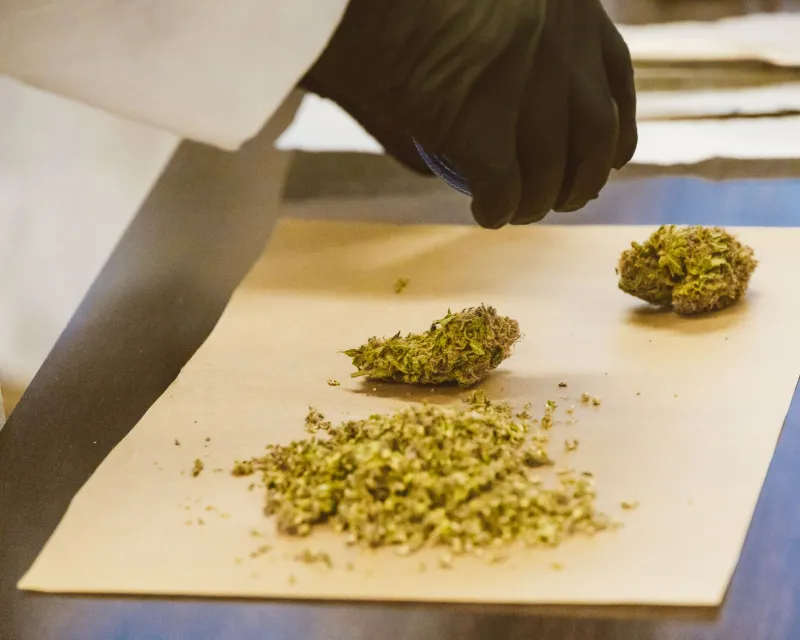
Caught in the Gray Zone: How Federal Regulatory Confusion Is Freezing Hemp Science in Its Tracks
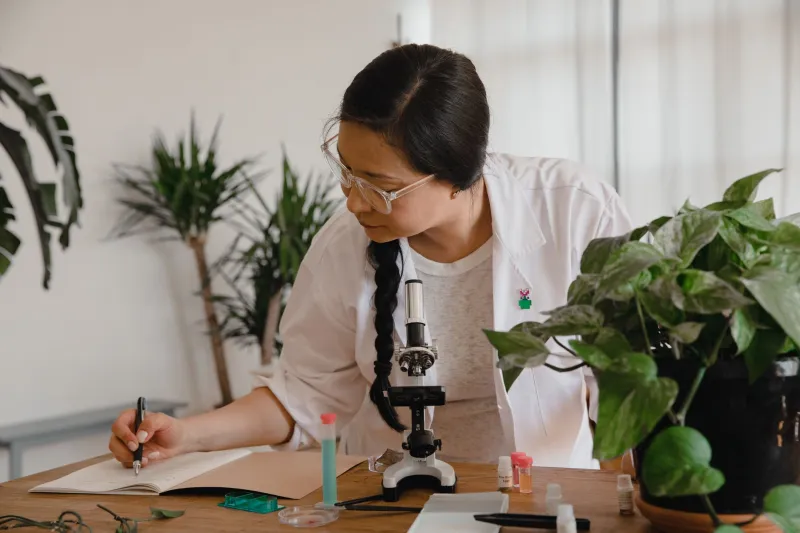
America's hemp research laboratories are not failing for lack of ambition or funding alone — they are failing because no federal agency can agree on the rules. A deepening conflict between DEA scheduling authority, FDA oversight mandates, and USDA agricultural policy has created a regulatory no-man's-land where legitimate scientists cannot operate without fear of legal exposure, and where international competitors are capitalizing on every month of American indecision.
For a plant that Congress formally removed from the Controlled Substances Act in 2018, hemp has proven remarkably difficult to actually study in the United States.
Three Agencies, Three Conflicting Authorities
When the 2018 Farm Bill passed with broad bipartisan support, it was widely celebrated as a turning point — the moment hemp would finally be treated as the agricultural and industrial crop it had always been. What followed, however, was not clarity. It was a jurisdictional puzzle that no agency has yet solved.
The USDA assumed authority over hemp cultivation and seed certification. The FDA retained jurisdiction over any hemp-derived compound used in food, dietary supplements, or medicine — including cannabidiol. The DEA, meanwhile, maintained that certain hemp-derived cannabinoids, particularly those produced through chemical conversion processes, might still qualify as controlled substances under the Federal Analogue Act.
The result is a three-way regulatory standoff in which the same molecule can be simultaneously classified as an agricultural commodity, an unapproved drug, and a potential Schedule I substance — depending entirely on which agency you ask and on what day.
"We spent the better part of a year trying to get a clear answer on whether our research protocol required a Schedule I researcher registration," said one biochemist at a Midwestern university who requested anonymity to avoid jeopardizing ongoing grant applications. "We never got one. We eventually just stopped the project."
The Chilling Effect No Law Actually Created
Perhaps the most damaging aspect of this regulatory environment is that it does not operate through explicit prohibition. There is no federal statute that says hemp researchers cannot study novel cannabinoids. There is no executive order blocking university labs from exploring hemp-derived terpene profiles or minor cannabinoid pharmacology. The paralysis is instead produced by ambiguity — by the threat of what might happen if a researcher proceeds without a definitive green light that no agency is currently prepared to issue.
Legal experts who work with agricultural and pharmaceutical clients describe this phenomenon as a "chilling effect" — a condition in which the mere possibility of regulatory sanction is sufficient to suppress behavior that may, in fact, be entirely lawful.
"Institutional review boards and university general counsels are extraordinarily risk-averse," noted a Washington, D.C.-based attorney specializing in cannabis and hemp regulatory compliance. "When they see that the DEA, FDA, and USDA have not issued coordinated guidance, their default response is to decline. They don't need an explicit ban. Uncertainty is enough."
This chilling effect is not hypothetical. It is playing out in real time across American research institutions, from flagship state universities to small independent laboratories that had anticipated a post-Farm Bill renaissance in hemp science.
What Researchers Cannot Study — and Why It Matters
The compounds most affected by this regulatory ambiguity are the so-called minor cannabinoids — molecules like CBG, CBN, THCV, and delta-8-THC — along with novel delivery mechanisms and hemp-based pharmaceutical applications. These are precisely the areas where hemp science holds the most promise for human health, sustainable materials development, and agricultural innovation.
CBG, for instance, has attracted early-stage scientific interest for its potential anti-inflammatory and neuroprotective properties. THCV has been studied in preliminary trials for its possible role in metabolic regulation. Delta-8-THC sits at the center of an ongoing DEA interpretive dispute that has left researchers, manufacturers, and retailers in a state of perpetual legal uncertainty.
None of these compounds are being adequately studied in American laboratories — not because the science is unsound, but because researchers cannot obtain institutional approval to proceed. Grant funding bodies, similarly cautious, are reluctant to invest in projects that carry undefined regulatory risk.
Meanwhile, research programs in Canada, Switzerland, Israel, and the Netherlands are advancing without comparable institutional friction. Canadian universities operate under a federal licensing framework that, while imperfect, at least provides researchers with a defined pathway. Israeli pharmaceutical companies have built global reputations in cannabinoid research partly because their regulatory environment — despite being more restrictive in some respects — offers greater predictability.
The International Competitive Gap Is Widening
Policy analysts who track the global hemp and cannabis research landscape are increasingly alarmed by the pace at which American scientific leadership in this field is eroding.
"The United States essentially invented the modern pharmacological study of cannabinoids," said one researcher affiliated with a national agricultural policy institute. "We have the foundational science, the intellectual history, the university infrastructure. And we are systematically wasting it because we cannot get three federal agencies to produce a coherent joint guidance document."
The competitive implications extend well beyond academic prestige. Intellectual property derived from cannabinoid research — patents on extraction methods, novel compound formulations, delivery technologies, and agricultural applications — is accumulating in foreign jurisdictions. American companies that want to license that IP will pay foreign patent holders. American farmers who want to grow hemp varieties optimized for specific cannabinoid profiles may eventually find themselves dependent on foreign seed genetics developed from research the United States could have led.
This is not a distant, theoretical risk. It is a process already underway.
What a Functional Framework Would Require
Resolving the current impasse does not require sweeping new legislation, though targeted statutory clarification would help. What it requires, at minimum, is coordinated interagency guidance — a formal, public statement from the DEA, FDA, and USDA that defines, with specificity, which hemp-derived compounds require what level of regulatory authorization for research purposes.
Advocates have proposed several mechanisms to accelerate this process: a formal interagency working group with a public comment period; expedited Schedule I researcher registration waivers for hemp-specific studies; and a safe harbor provision protecting academic researchers who operate in good faith under documented uncertainty.
None of these proposals are radical. All of them have precedents in other regulated research domains. What they lack is political will and bureaucratic urgency.
The Cost of Continued Inaction
Every month that passes without regulatory clarity is a month in which American hemp science falls further behind. Researchers who might have dedicated careers to this field are redirecting their expertise. Graduate students are choosing dissertation topics in less legally fraught areas. Private investors, unwilling to fund research that cannot reliably reach commercialization, are taking their capital to jurisdictions with clearer rules.
The 2018 Farm Bill was supposed to end hemp's decades-long exclusion from American agricultural and scientific life. In the most literal sense, it did. But exclusion by statute and exclusion by regulatory confusion produce the same outcome: a science that cannot grow, and a plant whose full potential remains locked away — not in a vault, but in a bureaucratic maze that no agency has been willing to dismantle.
America built the foundation of hemp science. The question now is whether it will allow that foundation to be built upon — or whether it will continue watching from the sidelines as the rest of the world constructs the future.