Washing Away the Problem: How Hemp Fiber Is Emerging as a Frontline Defense Against Microplastic Pollution
Every time a polyester fleece jacket or a pair of synthetic-blend leggings passes through a standard American washing machine, it sheds. Not visibly, not dramatically — but relentlessly. Researchers estimate that a single laundry load can release between 700,000 and 12 million microfibers into wastewater systems, particles so small that conventional municipal treatment infrastructure fails to capture the majority of them. From there, the path is direct and largely irreversible: into rivers, into coastal waters, into the ocean, and ultimately into the tissues of marine life and, increasingly, into human bodies.
The scale of this problem is not speculative. The National Oceanic and Atmospheric Administration has identified synthetic microfibers as one of the most pervasive forms of marine debris in American coastal environments. Studies published in peer-reviewed journals have detected microplastics in drinking water sources, in seafood sold at American grocery stores, and in human lung and blood samples. The fashion industry, which produces an estimated 60 percent of all textiles from synthetic petroleum-derived fibers, has acknowledged the issue — but meaningful, scalable solutions have remained frustratingly elusive.
This is precisely where hemp enters the conversation, not as a theoretical alternative, but as a scientifically grounded, agriculturally viable material with properties that make it uniquely suited to address the microplastic crisis from multiple directions simultaneously.
The Absorption Science Behind Hemp Fiber
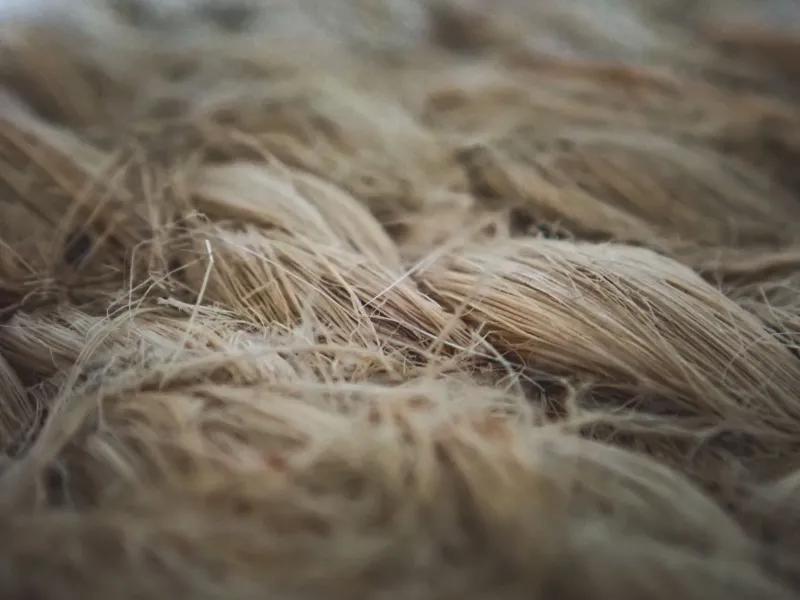
Hemp's cellular architecture gives it characteristics that synthetic fibers fundamentally cannot replicate. The primary structural component of hemp bast fiber is cellulose — a naturally porous, hygroscopic polymer that readily absorbs and retains particulate matter from aqueous environments. Studies examining natural cellulosic fibers have consistently demonstrated their capacity to trap microplastic particles through a combination of mechanical entanglement and surface adhesion, processes that depend on the rough, multiscale texture of plant-derived fibers.
Research conducted at European textile institutes has measured hemp fiber's surface area per unit weight as significantly higher than that of cotton, giving it a greater capacity for particle capture in filtration applications. When hemp fiber is processed into nonwoven filtration pads or incorporated into laundry bag liners, preliminary testing suggests it can intercept a meaningful proportion of the synthetic microfibers released during a wash cycle before they enter the drain.
Critically, hemp fiber is itself fully biodegradable. Unlike microplastic-laden synthetic filters, which create a secondary waste problem when disposed of, hemp-based filtration materials can be composted at end of life — provided they have not been treated with persistent chemical finishes, an area where formulation research is actively progressing.
From Lab Bench to Laundry Room: Pilot Programs Taking Shape
Several startups and research institutions have begun translating these material properties into practical consumer products. Washing bag designs — fine-mesh laundry containment bags originally popularized by brands such as Guppyfriend — are now being prototyped with hemp-derived fiber linings that augment mechanical filtration with the absorption capacity of natural cellulose. Early-stage testing indicates that combining the structural barrier of a tight mesh with the adhesive surface properties of hemp fiber may outperform either approach in isolation.
In parallel, a small number of American textile manufacturers have begun exploring hemp-blend filter inserts designed to retrofit existing top-loading and front-loading washing machines. These inserts, positioned in the drainage pathway, aim to intercept microfibers before wastewater exits the appliance entirely — a point-of-capture strategy that environmental engineers widely regard as the most effective intervention available given the limitations of downstream municipal treatment.
The commercial and regulatory environment is beginning to align with these efforts. France became the first country to mandate microfiber filters in all new washing machines sold after 2025, and advocacy groups in the United States are pressing the Environmental Protection Agency and state-level regulators to pursue similar requirements. Should federal or state mandates materialize, the demand for scalable, domestically produced filtration material could expand rapidly — and hemp farmers stand to benefit directly.
Positioning American Hemp Agriculture Within the Circular Economy
The circular economy framework — which seeks to eliminate waste by designing products and systems that retain material value across multiple use cycles — has become the organizing principle for fashion industry sustainability commitments. Major American retailers and apparel brands have signed onto circular economy pledges under pressure from investors and consumers alike. Yet the gap between stated commitments and material reality remains wide, in large part because genuinely circular, biodegradable alternatives to synthetic fibers have not scaled to meet commercial demand.
Hemp cultivation offers a compelling entry point into this framework. The crop requires no synthetic pesticides under standard agronomic practice, sequesters carbon in both its above-ground biomass and root systems, and produces bast fiber that can be processed into filtration materials, nonwoven fabrics, and textile blends using existing industrial infrastructure. American farmers in states including Kentucky, Colorado, and North Carolina have already demonstrated the agronomic viability of domestic hemp fiber production; what has been lacking is the downstream demand signal to justify the capital investment in processing capacity.
Microplastic filtration applications represent precisely the kind of high-value, mission-aligned demand signal that the American hemp fiber sector needs. Unlike commodity textile markets where domestic hemp struggles to compete on price with imported synthetic alternatives, filtration products command premium positioning on the basis of environmental performance — a value proposition that aligns with both consumer preferences and emerging regulatory requirements.
The Broader Textile Transition Hemp Makes Possible
It would be a strategic error to frame hemp's role in microplastic mitigation solely as a filtration story. The more transformative possibility is a gradual displacement of synthetic fibers in garments themselves. A shirt woven from hemp fiber does not shed persistent microplastics in the wash. A hemp-cotton blend reduces the synthetic fiber load per wash cycle proportionally. At sufficient scale, a shift in the composition of American wardrobes away from polyester and nylon toward natural fiber blends would reduce microplastic emissions at the source — the most durable solution of all.
This transition will not happen through consumer choice alone. It requires investment in domestic hemp fiber processing infrastructure, research and development support for hemp-blend textile technologies, and procurement commitments from major apparel brands willing to absorb near-term cost premiums in exchange for long-term supply chain resilience and regulatory compliance.
The policy architecture to support this transition is within reach. Farm bill provisions supporting hemp fiber research, EPA engagement on microplastic source reduction standards, and federal procurement preferences for bio-based textiles could collectively create the market conditions under which American hemp cultivation scales meaningfully.
A Pollution Crisis With a Field-Ready Answer
The microplastic problem did not emerge overnight, and it will not be resolved by any single intervention. But the convergence of hemp fiber's demonstrable absorption properties, the growing body of pilot research on hemp-based filtration, and the increasing regulatory pressure on the fashion industry to account for its microfiber emissions creates a genuine opportunity — one that connects American farmland directly to one of the most pressing environmental challenges of our era.
Saving the ocean from synthetic microfibers may, in part, begin with what American farmers choose to plant in their fields. The science is pointing in that direction. The question now is whether the investment, the policy support, and the industry partnerships necessary to act on that science will materialize before the damage compounds further.


