Thirsty Myths, Drought-Ready Reality: What the Data Actually Says About Hemp and Water
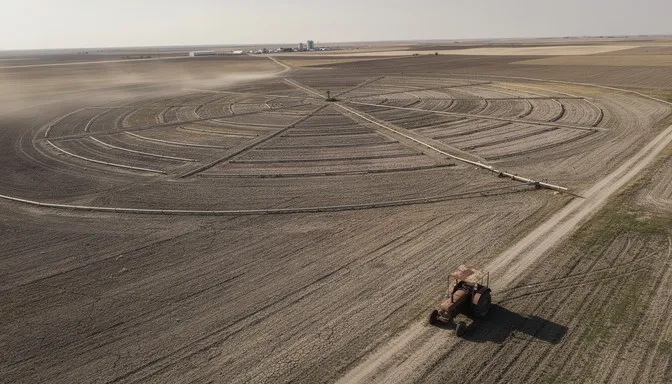
Photo: hemp field irrigation drought dry farmland aerial view, via images.stockcake.com
Among the many misconceptions that continue to shadow hemp cultivation in the United States, few are as persistent — or as consequential — as the assumption that growing hemp demands extraordinary volumes of water. Critics of sustainable agriculture frequently conflate "specialty crop" with "resource-intensive," and hemp has not escaped this flawed logic. Yet the agronomic data, accumulated across decades of international research and a growing body of post-Farm Bill domestic field trials, paints a markedly different picture.
As water scarcity becomes one of the defining agricultural crises of the twenty-first century, the question of which crops can perform under hydrological stress is no longer academic. It is existential. And hemp, it turns out, has a compelling answer.
The Benchmark That Changes Everything: Cotton vs. Hemp
To understand hemp's water profile, one must first understand what American agriculture has accepted as normal. Cotton — the backbone of the U.S. textile industry and a crop grown across roughly 10 million acres annually — requires approximately 1,500 gallons of water to produce a single pound of fiber, according to data compiled by the World Wildlife Fund and corroborated by USDA Economic Research Service reports. That figure accounts for both irrigation and embedded rainfall, a methodology known as water footprint accounting.
Hemp fiber, by contrast, requires an estimated 300 to 500 gallons per pound of usable fiber under comparable accounting methods. Research published through the European Industrial Hemp Association, which has conducted longitudinal cultivation studies across diverse climate zones, consistently places hemp's water demand at roughly one-third to one-fifth that of cotton. For American farmers in water-stressed states like California, Arizona, and Texas — where cotton remains a significant cash crop — this differential is not a minor efficiency gain. It represents a fundamental shift in what sustainable fiber production can look like.
Corn, another dominant American crop and a frequent point of comparison in water-use discussions, requires approximately 127 gallons of water per pound of grain under average irrigation conditions, according to USDA National Agricultural Statistics Service data. Hemp grain cultivation, while less dramatically divergent from corn than from cotton, still demonstrates favorable efficiency, particularly in its reduced dependence on supplemental irrigation during mid-season growth phases.
Deep Roots, Lighter Touch
The biological explanation for hemp's relative water efficiency lies largely in its root architecture. Industrial hemp develops a robust taproot system capable of penetrating 6 to 12 inches into the soil during its early growth stages — a characteristic that allows the plant to access subsoil moisture reserves that shallower-rooted crops cannot reach. This deep root penetration also improves soil structure over successive growing seasons, enhancing the water-retention capacity of the topsoil itself.
This is not an incidental benefit. In regions where the USDA's Natural Resources Conservation Service has documented significant topsoil degradation — including large swaths of the Corn Belt and the Southern Plains — the soil-building properties of hemp's root system create a compounding water efficiency advantage. A field that has hosted hemp rotation stores more moisture naturally, reducing the irrigation burden on subsequent crops.
Furthermore, hemp's rapid canopy closure — the point at which its leaf coverage shades the ground beneath — typically occurs within four to six weeks of germination under favorable conditions. This early canopy formation dramatically reduces evapotranspiration from the soil surface, conserving ground-level moisture that would otherwise be lost to ambient heat and wind.
Regional Variations: Not All Growing Zones Are Equal
It would be intellectually dishonest to suggest that hemp is a universally drought-proof crop. Like all agricultural systems, its water requirements vary meaningfully by geography, climate zone, and intended end use — whether fiber, grain, or cannabinoid production.
In the Pacific Northwest, where precipitation patterns are more reliable through the spring growing season, hemp cultivation can proceed with minimal or no supplemental irrigation for fiber varieties. University of Oregon extension trials conducted in the Willamette Valley have documented successful fiber hemp harvests with rainfall-only water inputs during normal precipitation years.
In the arid Southwest and the increasingly drought-affected Central Valley of California, the calculus is more nuanced. Cannabinoid-focused hemp cultivation — which prioritizes dense floral development and therefore requires more consistent moisture — does demand irrigation management. However, when compared to the water footprint of competing crops in those same regions, including almonds, pistachios, and alfalfa, hemp's per-acre consumption remains competitive.
The Great Plains present perhaps the most strategically significant opportunity. States including Colorado, Kansas, and Nebraska, which have seen groundwater levels in the Ogallala Aquifer decline precipitously over the past three decades, are actively seeking crop alternatives that reduce irrigation dependency. Hemp's demonstrated tolerance for periodic dry spells — combined with its ability to complete its life cycle in as few as 90 to 120 days — positions it as a viable rotational candidate for these vulnerable agricultural regions.
What the USDA Data Is Beginning to Confirm
Since the 2018 Farm Bill removed hemp from the Controlled Substances Act and opened the door to federally sanctioned cultivation research, American land-grant universities have begun generating domestic data to complement the international literature. Early results from programs at Colorado State University, the University of Kentucky, and North Carolina State University suggest that hemp performs with water efficiency consistent with European and Canadian field studies, even accounting for the diversity of American soil types and microclimates.
The USDA's Agricultural Research Service has also begun incorporating hemp into its broader sustainable cropping systems research, with particular attention to water-use efficiency metrics in semi-arid environments. While this research is still in its early stages, preliminary findings support the case that hemp can be integrated into American rotational systems without placing additional strain on already-stressed water resources.
A Drought-Resilient Future, If We Choose It
The American agricultural sector is navigating a water reckoning. Shrinking aquifers, unpredictable precipitation, and the intensifying effects of climate change are forcing a re-evaluation of which crops belong in the fields of tomorrow. The answer cannot simply be "the crops we have always grown."
Hemp does not solve every water challenge facing American agriculture. But the evidence is sufficiently robust to conclude that the assumption of hemp as a water-intensive crop is not grounded in agronomic reality. It is a myth — one that has been allowed to persist in the absence of widespread domestic cultivation data, and one that the emerging science is systematically dismantling.
For farmers in drought-prone regions looking for rotational options that can improve soil health, reduce input costs, and satisfy growing market demand for sustainable fiber and grain, hemp deserves a serious place in the conversation. The data says so. It is time our agricultural policy did as well.