Beneath the Surface: How Hemp Farming Reawakens the Living World Inside Degraded Soil
Photo: Bim24, CC0, via Wikimedia Commons
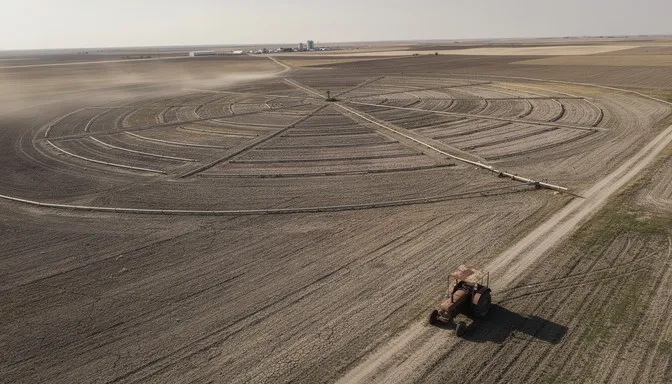
The crisis in American agriculture is not merely visible at the surface. It runs far deeper — literally. Beneath the compacted, chemically saturated fields that define much of the Midwest and the South lies a silent catastrophe: the near-total collapse of the microbial ecosystems that once made American soil among the most productive on earth. Decades of synthetic fertilizers, herbicide-heavy monocultures, and aggressive tillage have not simply depleted nutrients. They have dismantled entire biological communities — communities that, under healthy conditions, perform functions no synthetic input can fully replicate.
Hemp, it turns out, may be one of the most effective tools available for rebuilding what industrial agriculture destroyed.
What a Healthy Soil Microbiome Actually Does
Before examining what hemp contributes, it is worth understanding what has been lost. A single teaspoon of healthy agricultural soil contains upward of one billion bacterial cells representing thousands of distinct species, along with extensive fungal networks, protozoa, and nematodes that collectively regulate nutrient cycling, water retention, disease suppression, and plant hormone production. This is not background noise in the farming system — it is the system itself.
Mycorrhizal fungi, in particular, form symbiotic relationships with plant roots that extend a crop's effective nutrient-foraging range by orders of magnitude. Nitrogen-fixing bacteria convert atmospheric nitrogen into plant-available forms, reducing the need for synthetic fertilizer inputs. Nematodes and protozoa regulate bacterial populations, releasing nutrients locked in microbial biomass and making them accessible to crops. When these communities are intact, soil functions as a self-regulating biological engine. When they are degraded, farmers compensate with chemistry — an expensive, unsustainable substitution that accelerates the underlying decline.
Research published in Applied Soil Ecology and the European Journal of Agronomy has consistently documented that continuous monoculture cropping — particularly of corn and soybeans — dramatically reduces microbial diversity and suppresses the functional guilds most critical to long-term soil fertility. The application of glyphosate-based herbicides compounds this damage, with multiple studies linking repeated applications to reductions in beneficial fungal biomass and shifts in bacterial community composition toward less ecologically productive profiles.
Hemp's Root Architecture as a Biological Rebuilding Tool
Hemp (Cannabis sativa L.) brings a structurally distinct root system to the conversation. Its taproot penetrates soil to depths of three feet or more under favorable conditions, physically breaking up compaction layers that restrict water infiltration and root growth in subsequent crops. But the mechanical disruption is only part of the story.
As hemp roots grow, they release a continuous flow of exudates — sugars, amino acids, and organic acids — that selectively stimulate microbial activity in the rhizosphere, the narrow zone of soil immediately surrounding the root. Research from the University of Hohenheim and collaborating institutions has demonstrated that hemp cultivation significantly increases both the abundance and diversity of beneficial bacteria in this zone, including species from the genera Pseudomonas, Bacillus, and Azospirillum, all of which are associated with plant growth promotion and disease suppression.
Mycorrhizal colonization rates in hemp-cultivated soils have also drawn scientific attention. A 2021 study in Industrial Crops and Products found that hemp supported robust arbuscular mycorrhizal fungal communities, and that these communities persisted and benefited subsequent crops in rotation — a finding with significant implications for farmers designing multi-year soil restoration strategies.
Equally important is what happens when hemp is harvested. The plant sheds substantial leaf matter throughout its growing cycle and, when the stalks are cut, its extensive root mass decomposes in place, adding organic carbon to the soil profile. Organic matter is the substrate on which microbial communities depend. Fields with higher organic matter concentrations support larger, more diverse microbial populations, buffer against drought stress, and require less supplemental fertility management over time.
What Farmers Are Measuring on the Ground
Peer-reviewed laboratory studies are one data stream. What is happening on working American farms is another, and the two are beginning to converge in compelling ways.
Farmers in Kentucky, Colorado, and Oregon — three states where hemp cultivation has taken root at commercial scale — have begun integrating soil biology testing into their annual management protocols. Using services such as Haney Soil Health Testing and commercial microbial activity assays, growers are tracking changes in biological indicators before and after introducing hemp into their rotations.
The results reported across multiple case studies and extension-service interviews are consistent: fields that incorporated hemp for two or more consecutive seasons showed measurable increases in microbial biomass carbon, improved aggregate stability, and — critically — reduced dependence on synthetic nitrogen inputs in the seasons that followed. One Kentucky grain farmer documented a 20 percent reduction in nitrogen fertilizer requirements on corn planted in the second year after hemp, attributing the change to improved biological nitrogen cycling as measured by soil testing.
These on-farm observations align with a growing body of academic literature suggesting that hemp's soil-building effects are not incidental but structural — rooted in the plant's biology and its specific interactions with soil communities.
Designing Rotations Around Biological Recovery
For American farmers considering how to integrate these findings into practice, the most actionable insight from current research is that hemp functions most powerfully as a rotation crop rather than a continuous monoculture in its own right. Rotating hemp with corn, sorghum, or small grains appears to interrupt the disease and pest cycles that depress soil biology under continuous monoculture, while the hemp phases actively rebuild the microbial communities that improve performance in the subsequent grain crops.
Cover cropping hemp varieties — lower-stature cultivars grown primarily for biomass and soil improvement rather than fiber or grain yield — represent an emerging practice among regenerative farmers who prioritize biological soil health over commodity output. Research from North Dakota State University suggests that cover-cropped hemp can increase total soil microbial biomass by 30 to 50 percent over a single growing season in previously degraded fields, a rate of recovery that would require years of conventional cover-cropping with legumes or grasses to approximate.
The Regulatory Dimension
It would be incomplete to discuss hemp's soil-health potential without acknowledging the regulatory environment that has constrained its adoption. The 2018 Farm Bill removed hemp from Schedule I of the Controlled Substances Act and opened federal pathways for commercial cultivation, but state-level regulations vary significantly, and access to certified seed varieties suited for cover-crop and rotation applications remains uneven across the country.
Advocates and researchers alike have called on the USDA to accelerate the development of hemp-specific agronomic guidelines and to fund long-term soil health research that documents the crop's biological contributions at scale. The data that exists is promising. The data that is still needed — multi-year, multi-site, peer-reviewed field trials on American soil — requires investment that only federal research programs can provide at the necessary scope.
The Ground Beneath the Argument
The case for hemp as a soil-restoration tool is not built on optimism or agricultural nostalgia. It is built on microbiology, root physiology, and an accumulating body of field evidence that points in a consistent direction. American agriculture faces a soil health crisis that synthetic inputs cannot solve and that no single crop can fully reverse. But the research is clear: introducing hemp into degraded rotations reactivates biological communities that make the entire farming system more resilient, more productive, and less dependent on external chemical inputs.
For a country that has spent the better part of a century mining its soil biology for short-term yield gains, that is not a minor finding. It is, potentially, the beginning of a different kind of agriculture altogether — one that works with the living world beneath the surface rather than against it.